2026 Annual Convening

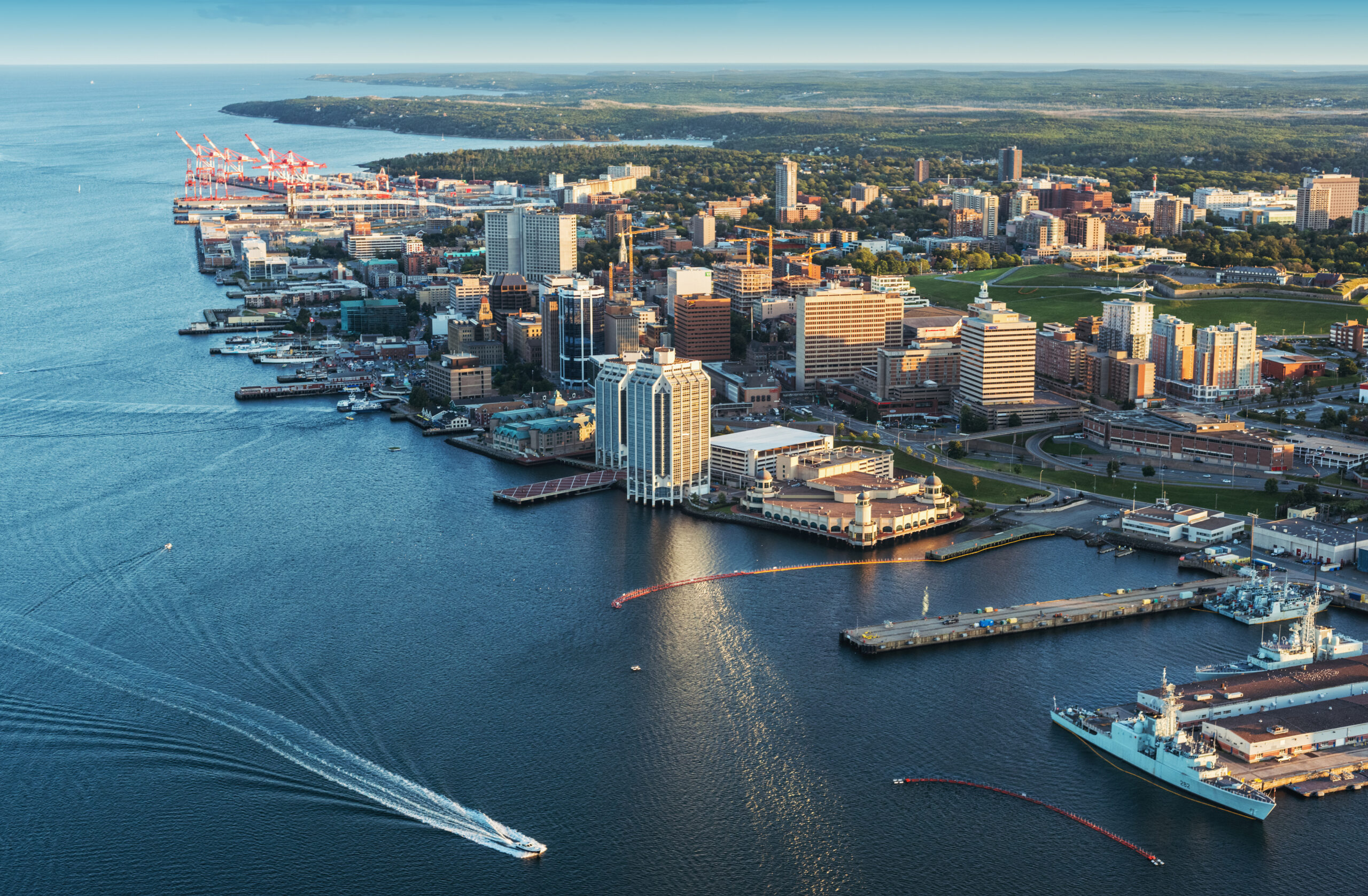
We are excited to bring our 2026 Annual Convening to Halifax, Nova Scotia. Canada is a fast-growing hub for ocean-climate research, and we’re looking forward to bringing together both local and global partners to create new opportunities for knowledge-sharing and collaboration.

For any event-related questions, please reach out to info@carbontosea.org.

General Event Information

The conference will take place at The Westin, Nova Scotian at 1181 Hollis St. in Halifax, Nova Scotia, Canada.


Registration will take place on the first floor (above the ground floor) of the Westin Nova Scotian on Tuesday, April 28th from 3:00 PM – 6:00 PM and on Wednesday, April 29th from 7:30 AM – 2:30 PM.

Please be advised that photographs and/or video footage may be taken at the event for use by Carbon to Sea Initiative and our partners on our website, social media, and in the press.

THE WESTIN NOVA SCOTIAN

Agenda

The 2026 Annual Convening will take place at the Westin Nova Scotian in Halifax from April 28 through April 30.

This year’s core agenda includes a welcome reception for all attendees on Tuesday, April 28 at 6:00 PM, followed by core programming all day Wednesday and Thursday. Core programming will conclude with a closing reception on Thursday evening. Please find a detailed agenda below.

Additional optional, space-limited site visits will be held during the day on April 28.

  • 9:00 AM – 3:30 PM – Optional, space-limited site visits to Dalhousie University’s OAE and ocean-climate labs, and Planetary’s OAE operations at Nova Scotia Power
  • 3:00 PM – 6:00 PM – Registration at first floor (above the ground floor) of Westin Nova Scotian
  • 6:00 PM – 8:00 PM – Welcome Reception
    • Halifax Train Station, 1161 Hollis St.
  • 7:30 AM – 8:30 AM – Registration Continues and Breakfast
  • 8:30 AM – 9:00 AM – Welcome, Land Acknowledgment, and Opening Reflections
      • Dr. Antonius Gagern, Ann LaBillois, and Fawn Sharp (Bio)
  • 9:00 AM – 12:30 PM – State of OAE Research
    • This session will highlight high-priority updates of OAE research related to its efficacy, environmental impacts, and field research developments. Scheduled coffee breaks will occur during this session.
      • Efficacy: Dr. Abby Lunstrum, Dr. Charly Moras, Matt Quinan, and Dr. Katja Fennel
      • Environmental Impacts: Dr. Kai Schulz, Dr. Jiaying Guo, Dr. Lennart Bach, Dr. Grace Andrews, and Sam Fawcett
      • Field Research: Irene Polnyi, Dr. Adam Subhas, Dr. Mallory Ringham, Dr. Will Burt, Doug Edwards, Audria Dennen, Sarah Schumann, Jacki Long, and Nick Kleinert
  • 12:30 PM – 1:00 PM – Keynote Address
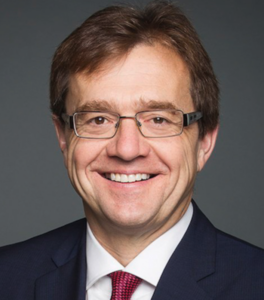
      • Hon. Jonathan Wilkinson, P.C., M.P. (Bio)
  • 1:00 PM – 2:30 PM – Lunch
  • 2:30 PM – 5:00 PM – Governing oCDR: National Signals and International Frameworks
    • This session will examine the policy environment at multiple levels shaping research. Practitioners will share policy case studies and provide an expert deep dive into the international governance frameworks for oCDR, highlighting developments across LC/LP, UNFCCC, and BBNJ. Scheduled coffee breaks will occur during this session.
      • OAE Policy in Practice: National and Regional Case Studies: Aarthi Ananthanarayanan, Dr. Sylvain Delerce, Dr. Mariam Swaleh, Maria Jose Urrutia, Dr. Yuwan Malakar (remote), Daniel Kelter, and Dr. Paul Halloran
      • International Governance and oCDR: Needs and Opportunities: Diane Hoskins, Romany Webb, Dr. Alice Alpert, Sue Biniaz, Anna-Marie Laura, Tom Pravda, and Dr. Chris Vivian
  • 8:00 AM – 9:00 AM – Breakfast
  • 9:00 AM – 9:05 AM – Welcome
      • Dr. Antonius Gagern
  • 9:05 AM – 10:05 AM – Exploring Markets and OAE’s Place
    • This session will provide an overview of the state of “the market” for OAE and explore diverse perspectives on the private sector’s role and commercial activity in carrying out OAE research.
      • Caroline Ott, John Mimikakis, Danny Broberg, Luke Connell, Dr. Celina Scott-Buechler, and Dr. Joachim Katchinoff
  • 10:05 AM – 10:15 AM – Workshops Overview
      • Dr. David Keller
  • 11:00 AM – 12:30 PM – Concurrent Morning Workshop Sessions
    • Indigenous Science Partnerships
      • Indigenous Peoples have long led rigorous, place-based scientific inquiry grounded in observation, stewardship, and intergenerational knowledge transfer. Across Canada, Indigenous-led research initiatives are advancing environmental monitoring, fisheries science, coastal stewardship, and climate adaptation—often in parallel with, and complementary to, academic and industrial R&D.
        Despite growing recognition of Indigenous Knowledge systems, there remain few venues that meaningfully platform Indigenous-led science as science, center Indigenous researchers as equal partners, and create space for reciprocal collaboration with international academic and private-sector scientists.
        This workshop is designed to foreground Indigenous-led scientific projects in Canada, highlight “two-eyed seeing” approaches that integrate Indigenous and Western scientific methodologies, and catalyze new relationships rooted in respect, reciprocity, and shared research goals.
      • Ken Paul and Brooke Moore
    • Perspectives on measurement requirements for MRV: from individual project to global impact
      • This MRV level-setting workshop seeks to report on and share progress in measurement-informed MRV development to date, and to set future targets. Through sharing perspectives from individual project standpoints to global-scale impact, we aim to better inform the OAE community and stakeholders, and spotlight areas requiring further research, technological advances, and improvements in metrology.
        Ultimately, it seeks to align present and future observing efforts by mapping a community-defined and supported “priority vector” that captures where and why measurement needs converge or diverge across applications (research vs operations), purposes (compliance, quantification, monitoring, process understanding), and scales (project to global).
      • Dr. Dariia Atamanchuk, Dr. Ellen Briggs, Dr. Kohen Bauer, Dr. Robert Izett, Jessica Oberlander, Dr. Ellen Park, and Dr. Adam Subhas
    • Learnings from Coastal Integrations for Open-Ocean Climate Solutions
      • OAE could enable durable carbon removal at scale, but near-term progress is constrained by limited field data and uncertainty around environmental impacts, permitting, and social license.
        To address these challenges, many OAE field pilots are integrated into existing coastal and industrial systems, such as desalination, wastewater treatment, and coastal restoration to leverage their existing infrastructure, expertise, and regulatory pathways. However, the field lacks a clear framework for assessing how insights from these integrations translate to large-scale implementation.
        This workshop will convene industry practitioners, researchers, and civil society representatives to evaluate the role of sectoral integrations in scaling OAE and to identify which learnings are broadly transferable versus context-specific.
      • Dr. Gabriella Kitch, Anu Khan, Toby Bryce, and Beck Woollen
  • 12:30 PM – 2:00 PM – Lunch
  • 2:00 PM – 3:30 PM – Concurrent Afternoon Workshop Sessions
    • A Path to Success: Expert Input on R&D Roadmapping
      • Key to OAE’s success as a climate solution is a shared vision for how to achieve science-informed policy decisions in the next decade and a research roadmap that lays out activities and key decision points along the way. This level of coordination requires regularly revisiting the industry’s accomplishments and remaining gaps in scientific knowledge, and reaffirming priorities and checkpoints.
        As the largest forum for OAE experts, the annual convening provides the platform to gather valuable data points for our roadmap, and to open a dialogue on OAE pathway-specific priorities, uncertainties, and vulnerabilities. This session will use an OAE pathway specific scenario-based approach to gather critical information for an R&D roadmap that will be externally shared later in the year.
      • Dr. David Keller and Laura Stieghorst
    • Learning from Experience: Takeaways from Early Community and Policy Engagement in mCDR
      • Responsible mCDR field research requires meaningful engagement between multiple actors at multiple scales. Researchers, technology developers, Indigenous Peoples, communities, and policymakers now have several years of experience experimenting with different how to engage on mCDR. But what have we learned? How can successes be replicated and missteps avoided?
        This workshop invites anyone involved in these early experiences of engagement – personally, organizationally, or through observations of the broader field – to share what they’ve learned and learn from others. We aim to move beyond high-level guidance to develop actionable, experience-based practices and guardrails for mCDR engagement and collaboration. Participants will have access to an early report-out from the session along with opportunities to continue learning across the field.
      • Dr. Celina Scott-Buechler
    • Assessing Environmental Risk of mCDR Projects with FEMM
      • As marine carbon dioxide removal (mCDR) projects move from field trials toward commercial scale, it is critical to rigorously, consistently and quantitatively evaluate their environmental safety in the ocean. This hands-on workshop introduces the Framework for Ecotoxicological Modeling of mCDR (FEMM v1.0), a structured approach for mCDR environmental risk assessment, alongside FEMMtool, Hourglass Climate’s web application for implementing the framework. FEMM adapts established ecotoxicology practices to unique mCDR challenges, including those for OAE.
        Designed for practitioners, regulators, standard setters and others with an interest in project risk evaluation, this workshop provides a practical toolkit for quantifying and interpreting environmental risks by providing an overview of FEMM’s key components, how they connect to form a complete ecotoxicological risk assessment pathway, and how to implement FEMM and assess risk for projects via a hands-on tutorial of FEMMtool.
      • Dr. Grace Andrews and Dr. Kristi Weighman
  • 4:00 PM – 5:00 PM – Closing Session
      • Dr. David Keller, various workshop leads, Danny Gawlowski, and Dr. Antonius Gagern
  • 5:00 PM – 7:00 PM – Closing Reception
    • Refreshments & heavy hors d’oeuvres will be served.

Speakers

Dr. Lennart Bach

University of Tasmania

Associate Professor, Institute for Marine and Antarctic Studies
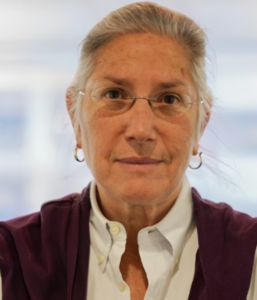
Susan Biniaz

Yale Jackson School of Global Affairs; Oceans 5

Senior Fellow and Lecturer; Diplomatic Advisor
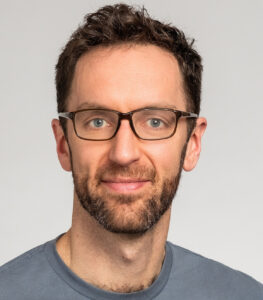
Samuel Fawcett

PML Applications

Manager of the Centre for Coastal Technologies
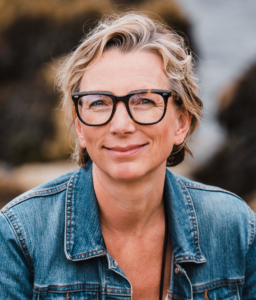
Dr. Joachim Katchinoff

CREW Carbon

CEO
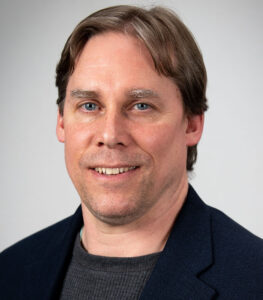
Dr. Gabriella Kitch

Carbon Removal Standards Initiative

The Navigation Fund Fellow
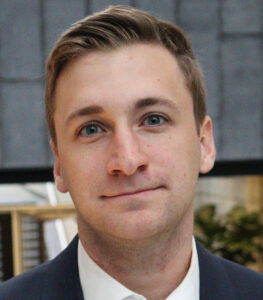
Elder Ann LaBillois

Dalhousie University

Elder in Residence
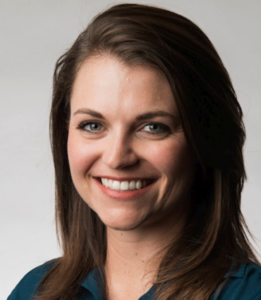
Dr. Abby Lunstrum

University of Pennsylvania

Research Associate
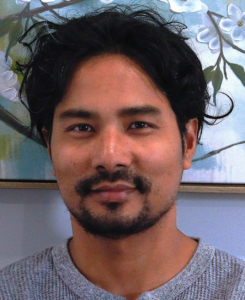
Tom Pravda

Climate Hub

Principal
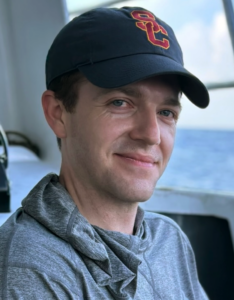
Dr. Kai Schulz

Southern Cross University

Associate Professor, Biological Oceanography