
By Carbon to Sea Initiative
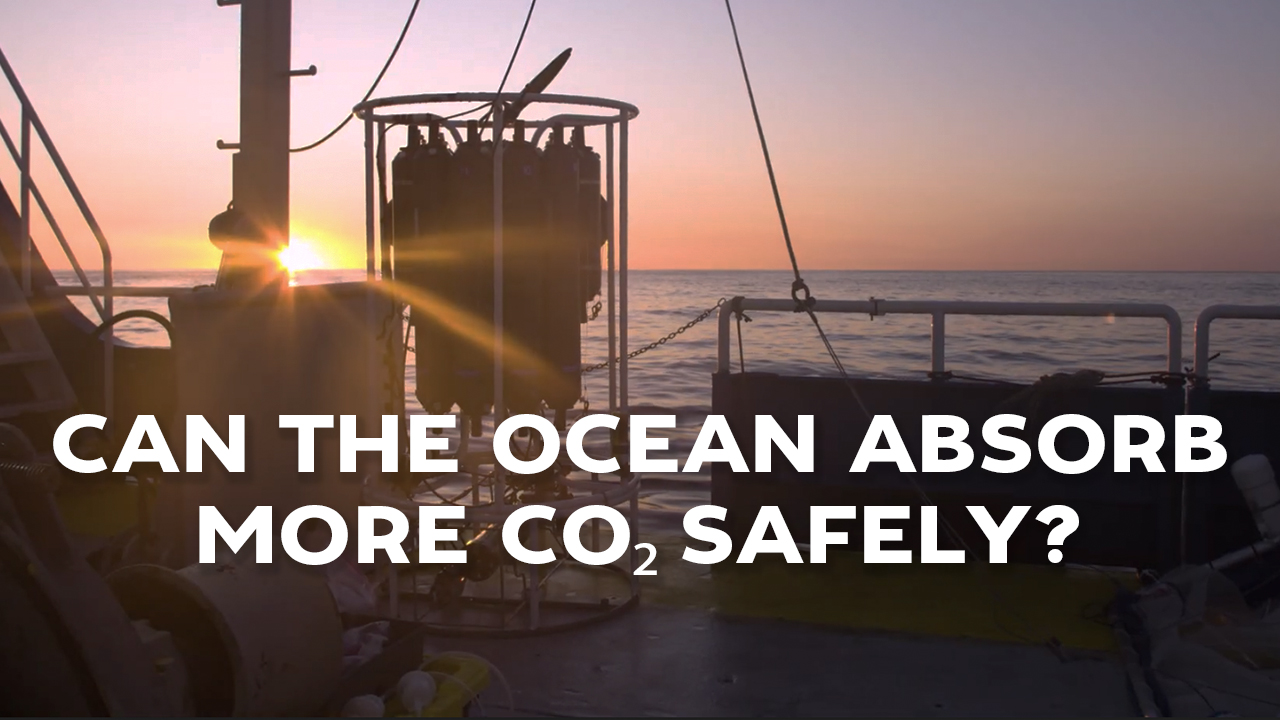
Carbon to Sea released a new video showcasing the Woods Hole Oceanographic Institution’s (WHOI) LOC-NESS project, a first-of-its-kind field research trial evaluating the environmental impact and effectiveness of ocean alkalinity enhancement (OAE) as a carbon dioxide removal solution. Funded in part by Carbon to Sea, the LOC-NESS project completed its EPA-approved, small-scale field trial in August 2025.
The video takes us onboard with the scientists leading the project in the Gulf of Maine, offering a closer look into their research. In it, we hear from lead scientists of the project, including Dr. Adam Subhas, Associate Scientist in Marine Chemistry and Geochemistry and Project Lead of LOC-NESS; Daniel McCorkle, Scientist Emeritus; and Jennie Rheuban, Research Specialist.
“These fundamental science questions need to get asked and answered now so that we have the information to make decisions about whether this should be something we can pursue at these really big scales,” said Dr. Adam Subhas, Associate Scientist in Marine Chemistry and Geochemistry at WHOI, and Project Lead of LOC-NESS in the video. “Having that information now is going to be really critical for decisions getting made tomorrow and into the future.”
The LOC-NESS project asks whether OAE, an emerging ocean carbon dioxide removal (oCDR) approach, is safe, effective, and scalable. The project built on years of research in the lab and in mesocosm environments, and went through an extensive permitting process. It was also informed by more than 50 community engagement and outreach activities.
More information and updates on the project, including preliminary results, can be found on the LOC-NESS project website.
Watch the full video on the LOC-NESS project above and learn more about the LOC-NESS project HERE.