
By Carbon to Sea Initiative
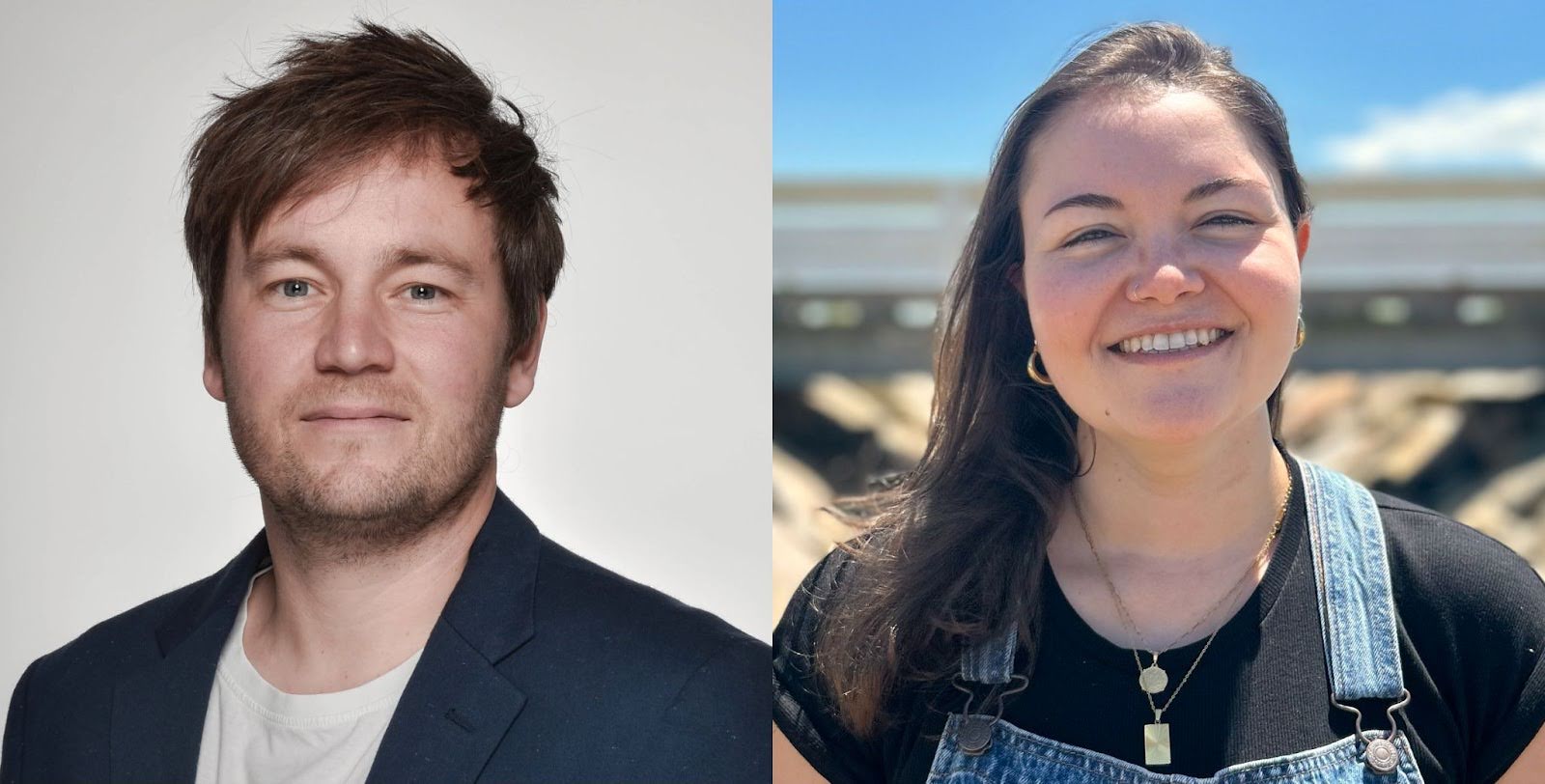
Carbon to Sea is pleased to welcome two new research fellows, Dr. Lauren Moseley and Dr. Jens Daniel Müller, who will coordinate the Ocean Alkalinity Enhancement Model Intercomparison Project (OAEMIP) and help guide its scientific direction. Supported by funding from Carbon to Sea and Google, OAEMIP is a first-of-its-kind effort that aims to deepen our understanding of how OAE’s efficiency for large-scale carbon removal varies depending on location and future climate change scenarios.
As interest in OAE grows, so too does the need for knowledge-sharing to accelerate research findings. At present, there is a comparability gap in OAE modeling studies, limiting scientists from more thoroughly understanding the full potential and limitations of OAE. OAEMIP seeks to address this challenge through coordinated, multi-model studies to strengthen our understanding of OAE’s efficiency for large-scale carbon removal. By establishing standards and protocols, the project aims to set a new benchmark for scientific rigor in this emerging field, and ultimately strengthen greater confidence in research findings and support responsible field development.
Dr. Lauren Moseley and Dr. Jens Daniel Müller will co-lead the development of experimental design protocols for OAEMIP, coordinate a consortium of internationally leading modeling centers, analyze the compiled ensemble of model simulations, and inform the scientific and public communities about the outcomes of OAEMIP.
Dr. Lauren Moseley comes to Carbon to Sea after conducting doctoral research at Columbia University and postdoctoral research at the University of Washington, specializing in the development, optimization, and evaluation of ocean biogeochemical models. Her doctoral work applied data assimilation techniques to improve modeled oxygen and carbon cycling in the North Atlantic, while her postdoctoral research leveraged observation-based data products to better understand simulated carbon sequestration in oxygen minimum zones.
Dr. Jens Daniel Müller received his PhD from the Leibniz Institute for Baltic Sea Research and completed a five-year postdoctoral appointment at ETH Zurich before joining Carbon to Sea. During this time, Jens coordinated the RECCAP2 initiative, which laid the scientific foundation for the Global Carbon Budget by synthesizing regional carbon budgets. An ocean biogeochemist by training, Dr. Müller brings extensive experience in developing and deploying instruments to measure the marine carbon dioxide system with statistical analyses to observe how the ocean absorbs carbon and responds to human-driven change.
Welcome Lauren and Jens! We look forward to seeing what new scientific advancements this project will make possible. More information on how modeling groups can learn more about participating in the project will be posted soon.