
By Carbon to Sea Initiative
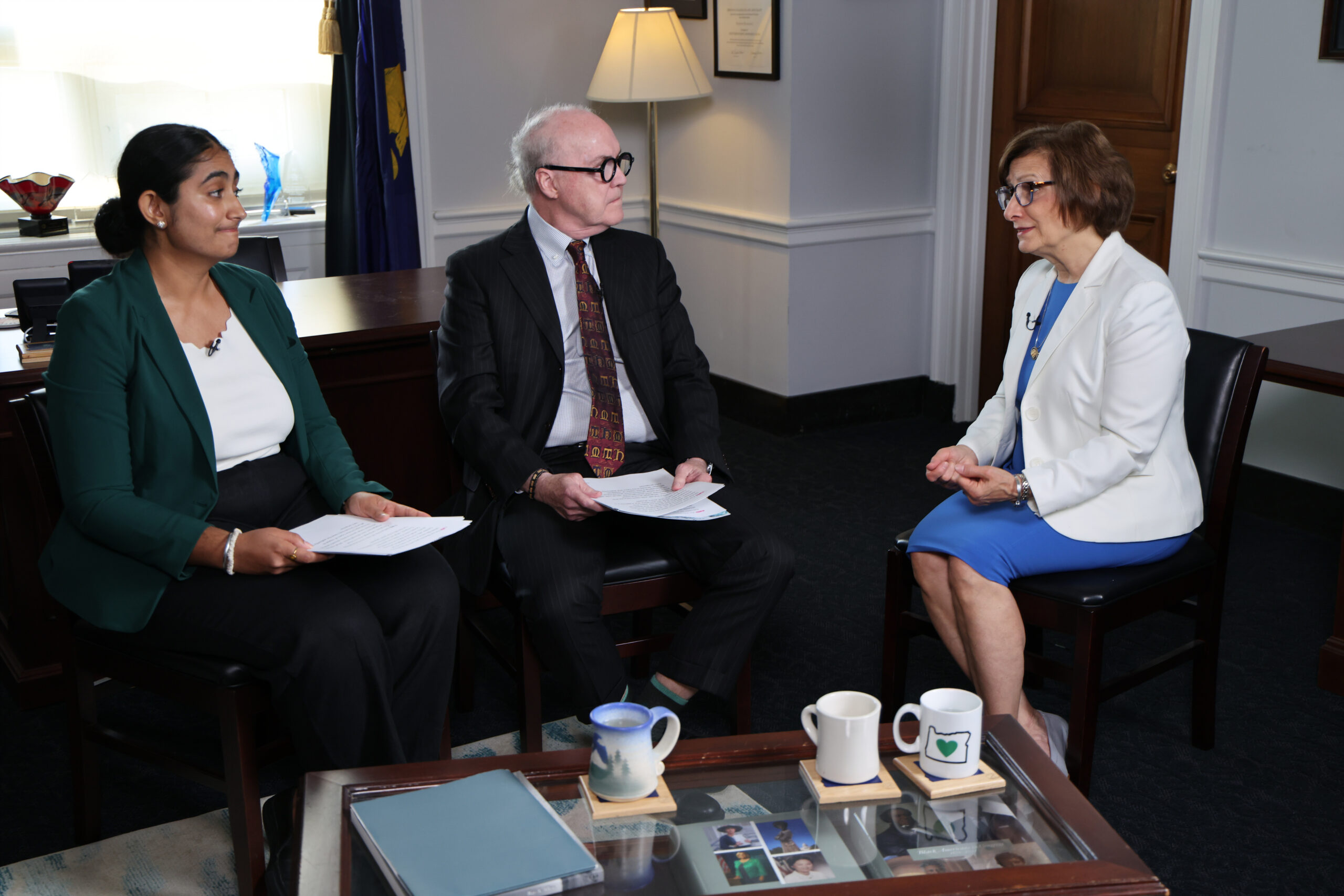
In this edition of Plan Sea, hosts Anna Madlener and Wil Burns are joined by Frank Rattey and Dr. Thorben Amann of Planeteers — a Hamburg-based carbon removal startup researching alkalinity-based carbon dioxide removal (CDR) approaches — to discuss the science behind their closed-system pathway, their first field tests, and the national regulations guiding ocean-climate research.
Dr. Thorben Amann is the Research and Development Lead at Planeteers and a geochemical CDR specialist. In this episode, Thorben explains how Planeteers’ closed-system approach differs from other ocean alkalinity enhancement (OAE) strategies. Rather than dissolving alkalinity directly in the ocean to drive carbon dioxide uptake, Planeteers combines carbon dioxide from point sources and alkaline feedstock in a closed reactor where it forms stable alkalinity and is then discharged into rivers or oceans.
Thorben walks through the chemistry behind this process and explains how this approach offers advantages for monitoring, reporting, and verification (MRV). Because inputs and outputs are in a controlled reactor, Thorben asserts it’s easier to conduct monitoring and initial reporting. At the same time, Thorben highlights a key challenge for the field: ensuring the stability of the alkalinity after discharge. For carbon storage to be durable, he explains that the alkalinity must remain equilibrated and stable.
Frank Rattey, Co-Founder and Managing Director of Planeteers, then discusses Project Helix, Planeteers’ first field deployment located at a wastewater treatment plant in Hetlingen, Germany. Validated through the registry Isometric, this first-of-its-kind research project discharges alkalinity-enriched water into the treatment plant’s aquatic system to provide long-term carbon storage.
Noting that Germany is the only country in the world that has translated the London Convention London Protocol into national law, Frank also offers insight into how Planeteers is operating under Germany’s regulatory environment. In order to conduct their field research safely and responsibly, Planeteers cooperates with wastewater treatment plants, construction permits, and regional water authorities in the country.
Looking ahead, Frank and Thorben outline Planeteers’ effort to develop a more open-system pathway using ikaite, a slower-dissolving, stable mineral that could avoid pH spike concerns often associated with hydroxide-based OAE. While this work is still in early stages, Frank and Thorben talk through the potential for a parallel system in the future. They also discuss Planeteers’ upcoming project in Kiel, as well as the potential for additional projects in Switzerland, Hamburg, and Norway.
To learn more about Planeteers’ closed-system, alkalinity-based CDR approach, listen to the episode above, subscribe with your favorite podcast service, or find the entire series here.
Plan Sea is a semi-weekly podcast exploring ocean-based climate solutions, brought to you by the Carbon to Sea Initiative and the American University Institute for Responsible Carbon Removal.