
By Carbon to Sea Initiative
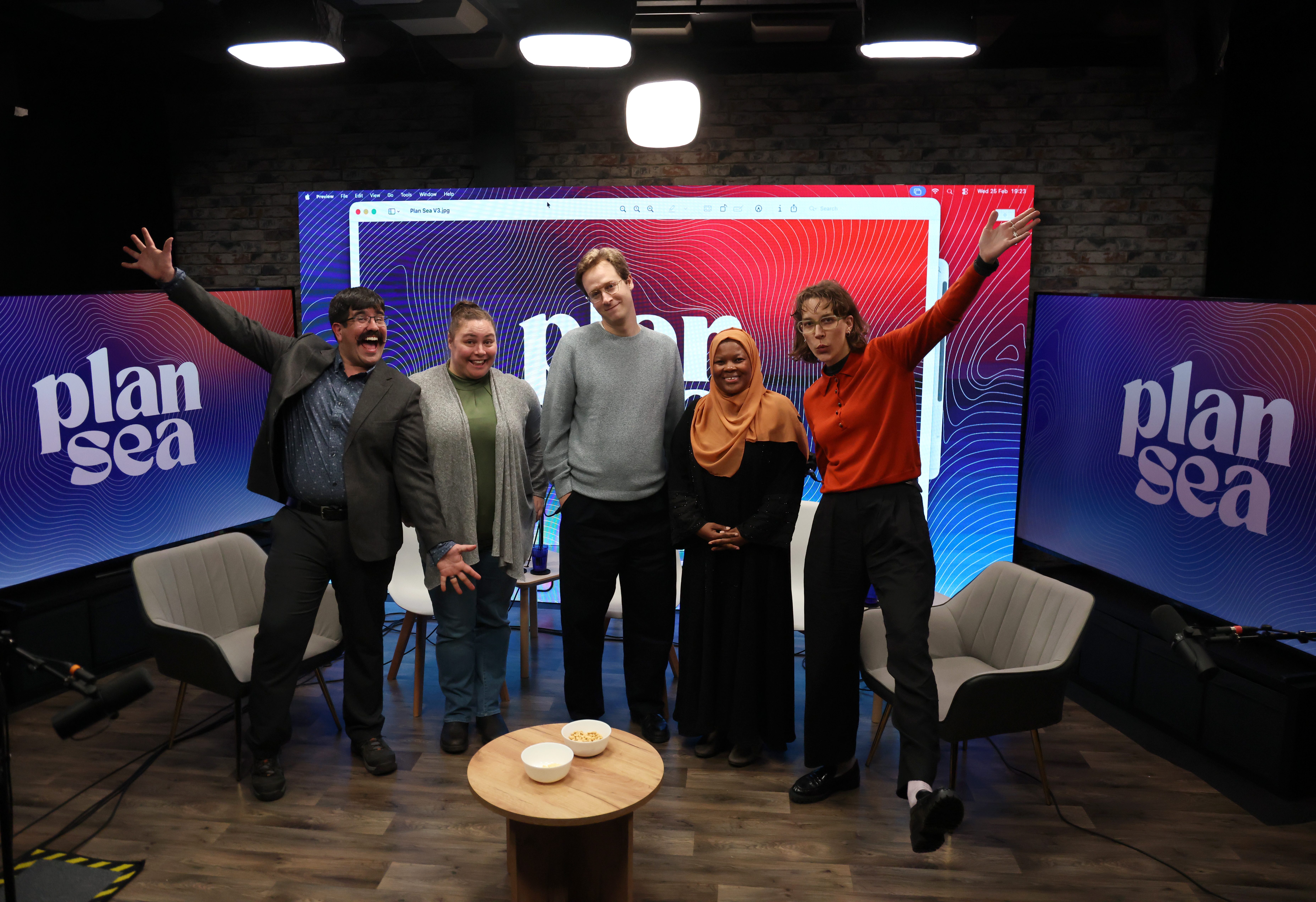
In this special video edition of Plan Sea, host Anna Madlener and Carbon to Sea’s Senior Manager for Communications, Danny Gawlowski, record from the Ocean Sciences Meeting (OSM) in Glasgow, Scotland. They sit down with members of the COMPASS mCDR Communication Leaders program — Dr. Abigale Wyatt, an ocean modeler from [C]Worthy, Dr. Mariam Swaleh, who leads the Ocean Climate Innovation Hub in Kenya, and Dr. Kohen Bauer, science director at Ocean Networks Canada — to explore what makes science communication effective, where it falls short, and lessons learned for communicating about mCDR research.
The Communication Leaders program, sponsored in part by Carbon to Sea, aims to support mCDR experts with the skills to engage with policymakers, media, funders, and local communities, helping them to foster responsible dialogue across the field. Drs. Wyatt, Swaleh, and Bauer shared how — through a series of virtual trainings and a culminating two-day, in-person workshop — participants collaborated on exercises to clarify their audience, utilize accessible language, and practice realistic scenarios through role-playing stakeholder engagements. These exercises helped build confidence, expose gaps in existing community engagement practices, and approach forums like OSM with a clearer communication lens.
Effective science communication is essential to bridge mCDR researchers and their scientific findings with peers in other fields, decision-makers who influence research permitting and funding, and communities where research is happening. Dr. Bauer framed it as a foundational skill operating as the basis for collaboration and learning. A chemist by trade, Dr. Swaleh emphasized the limits of highly technical jargon and noted that accessible language is key to reaching your audience. Dr. Wyatt first saw the benefits from the personal experience of navigating conversations with climate skeptical family members.
Our guests also discuss challenges in communicating across cultures, different types of stakeholders, highly politicized environments, language barriers, and different levels of scientific literacy. Dr. Swaleh shares part of this difficulty in the way “common” phrases, such as climate change, can experience difficulties in the way they are translated. She recounts how in Kiswahili, the notion of climate change moved from discussing the weather to “patterns of the country.” In this way effective communication requires slowing down, listening first, and building a shared understanding together.
Thank you to everyone who shared their time to join us in-person at OSM in Glasgow, it was an incredibly insightful opportunity to connect, reflect, and learn alongside the field’s global community. To learn more about the COMPASS mCDR Communications Leaders program and the insights Drs. Wyatt, Swaleh, and Bauer shared about how they approach communications across different audiences and contexts, watch or listen to the episode above. You can also subscribe with your preferred podcast service and find the entire series here.
Plan Sea is a semi-weekly podcast exploring ocean-based climate solutions, brought to you by the Carbon to Sea Initiative and the American University Institute for Responsible Carbon Removal.