
By Carbon to Sea Initiative
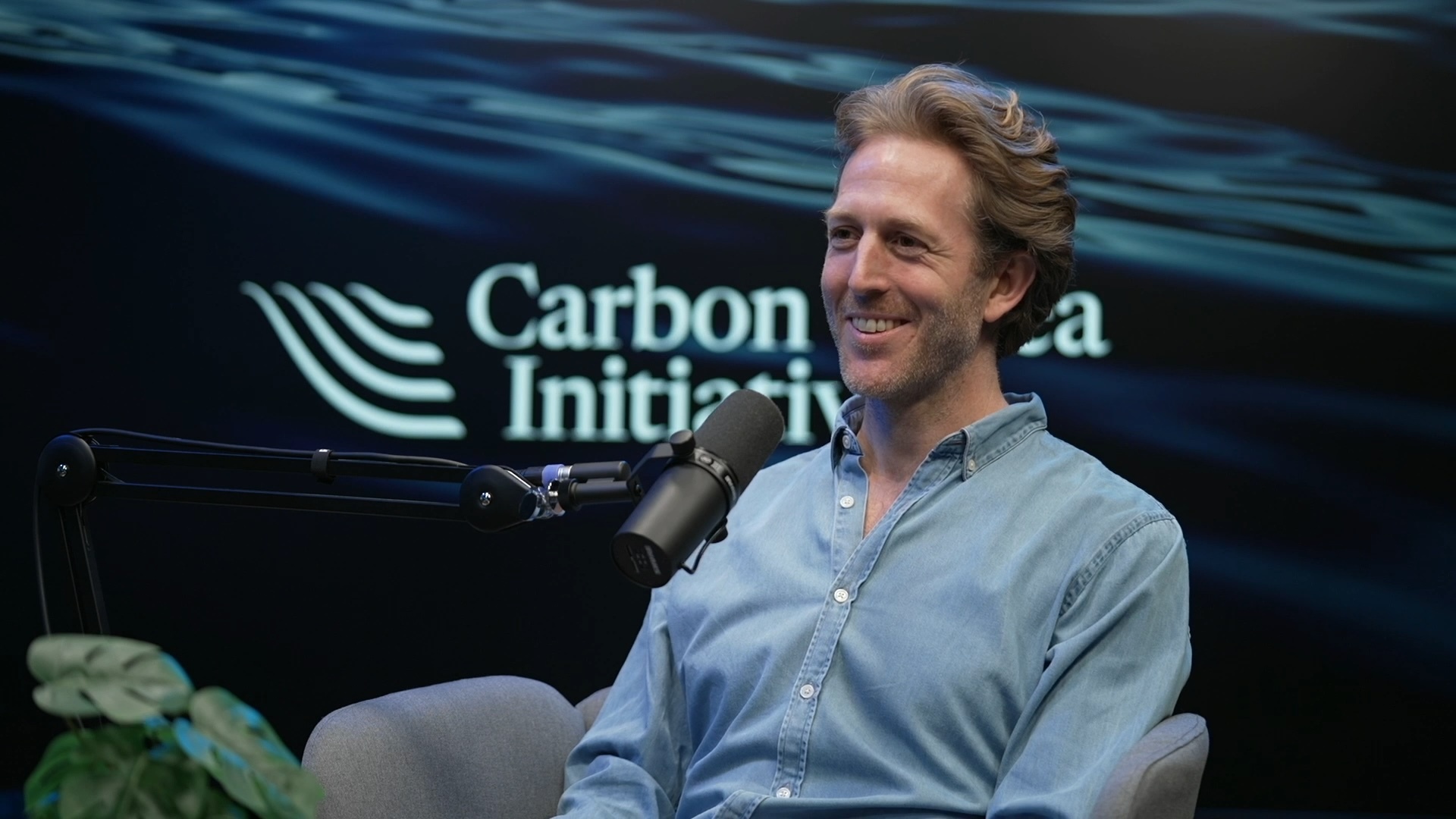
As Carbon to Sea heads into our 2026 Annual Convening, Executive Director Dr. Antonius Gagern sat down with Senior Manager for Communications and Policy, Danny Gawlowski, to discuss Carbon to Sea’s founding, evolution, and its role in the rapidly-developing ocean-climate field.
Antonius joined Danny from the 2026 Ocean Sciences Meeting in Glasgow, Scotland to reflect on the state of Carbon to Sea’s original mission: to evaluate ocean alkalinity enhancement’s (OAE) safety, efficacy, and desirability as a climate solution. Over the past three years, Carbon to Sea has evolved and expanded its scope of work.
Today, our team is part of a broad and growing field of 1,000+ people who are advancing first-of-its-kind research, collaborating with public and private sector institutions, and engaging with decision makers and global leaders. Reflecting on this evolution, Antonius emphasizes the importance of this next phase of work: building empirical evidence in the real world about how and whether OAE works under some conditions better than under others, which is critical information for decision makers in the government and private sectors; and to continue building the guardrails and enablers for this emerging sector so that society doesn’t move in a detrimental direction.
“Climate change is really a long-term, slowly developing threat that is emerging like a storm on the horizon, and we have to do as much as we possibly can within this generation and the next to prepare for it, “ said Antonius. “We need to have the patience to really thoroughly investigate every question, while at the same time building a sector that is enabled to contribute to carbon dioxide removal.”
“What I see as the big goal of Carbon to Sea in the coming years is to avoid one of two mistakes that society could make in the face of a complicated crisis and a challenging set of solutions,” he continued. “One mistake would be to too quickly accept a CO2 removal pathway as promising, safe, and effective, and just open the floodgates to scale it. The other mistake would be to too quickly close the doors to a pathway or to a set of pathways that seem complicated or less well understood or known to the general audience, but carry a lot of potential. And our organization will work really hard in the next few years to hold that middle and avoid either one of those mistakes.”
We look forward to continuing these conversations at our 2026 Annual Convening in Halifax, Nova Scotia!
Watch the full interview above and learn more about Annual Convening: HERE