
By Carbon to Sea Initiative
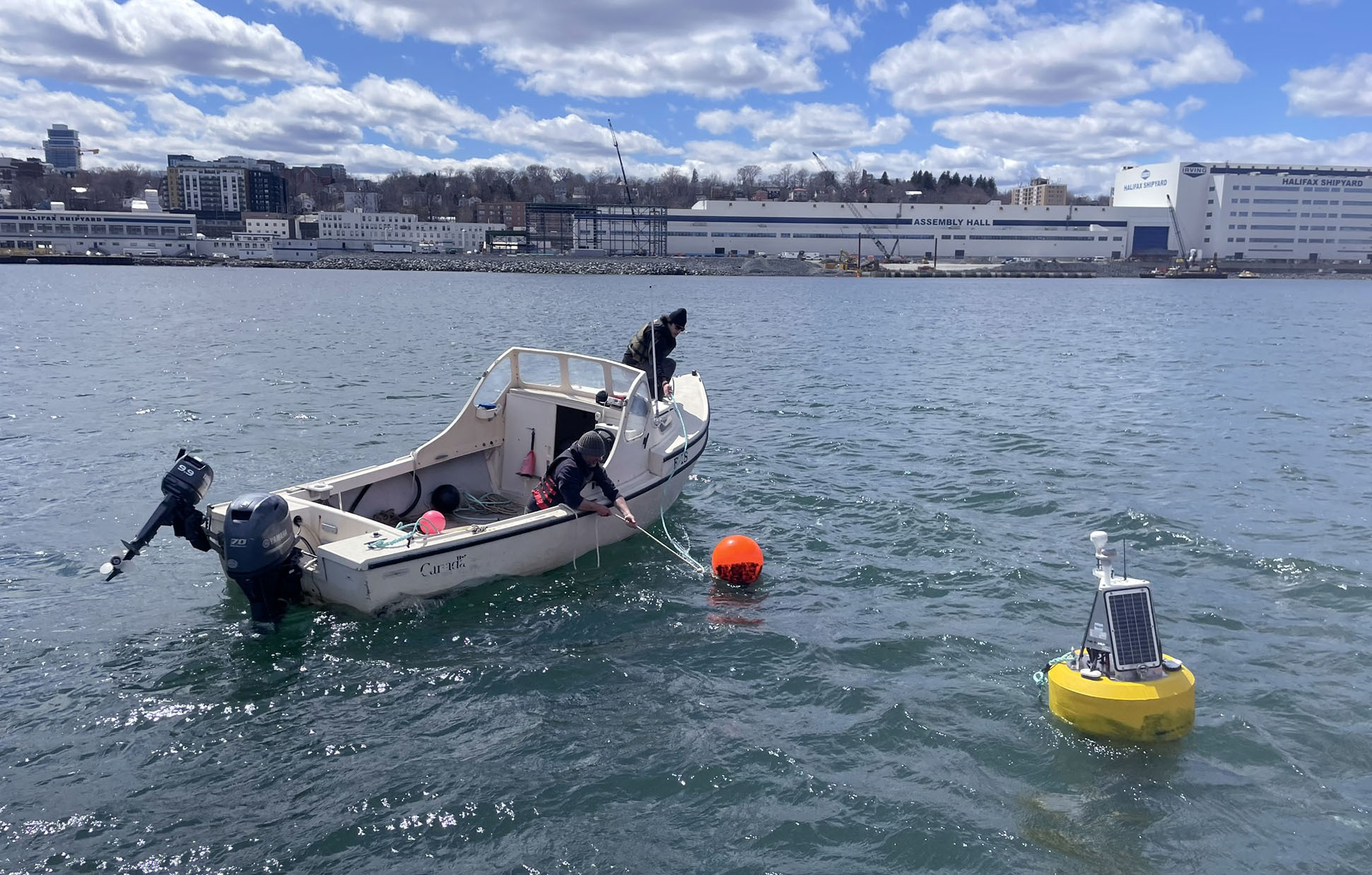
Today, the Carbon to Sea Initiative, MEOPAR, and Planetary are pleased to announce the selection of awardees of the 2026 Halifax OAE Joint Learning Opportunity (JLO). This opportunity was designed to support scientists conducting research and companies piloting new technology for emerging ocean-based carbon dioxide removal solutions, while collaborating with ongoing work at Tufts Cove, Nova Scotia by Planetary Technologies and Dalhousie University in the Bedford Basin.
This award builds upon the success of the first Joint Learning Opportunity in 2024 and more than doubles the total award amount and number of projects supported. Funding awardees will kick off projects spanning scientific, technical, and social research questions surrounding the efficacy, safety, and desirability of ocean alkalinity enhancement (OAE) as an ocean climate solution.
This JLO cohort represents the largest and most diverse cohort of OAE projects funded to date, and is a testament to the potential of this funding mechanism. Projects receiving award funding include: measuring potential impacts on plankton communities; assessing trace metal feedbacks; integrating First Nations knowledge; near-field sensing tools and methods; and incorporating OAE in climate storytelling.
| Project Title | Grantee Institution(s) | Project Lead(s) |
| Beyond toxicity: Impacts of OAE on a subarctic zooplankton community | Bigelow Laboratory for Ocean Sciences | Karen Stamieszkin |
| How to evaluate and monitor benthic impacts at an OAE point source addition site | Dalhousie University | Christopher Algar, Julie LaRoche, Craig Brown |
| Assessing N2O and trace metal feedbacks from OAE in Halifax Harbour | Dalhousie University | Carolyn Buchwald, Natalya Evans |
| Quantifying alkalinity-driven biogeochemical and microbial responses in Halifax Harbor through continuous in-situ measurements | Dalhousie University, Duke University | Julie LaRoche, Katryna Niva, Nicolas Cassar |
| Assessing the biological impact of OAE on plankton communities in the Halifax Harbour. | Dalhousie University | Julie LaRoche, Fanny Fronton, Jennifer Tolman |
| Integrating First Nations knowledge and concerns into monitoring frameworks for OAE | Lennox Island First Nation, Mi’kmaq Confederacy of PEI, Onda | Corrine Dyment, David Stirling, Jordan Poley |
| Assessing the impacts of OAE on the partitioning and speciation of metals in coastal systems | University of Pennsylvania | Abby Lunstrum, Jennifer Wilcox |
| Turning OAE research into storytelling for climate impact | The Mighty Pen | Pam Sullivan, Sean Kelly |
| Investigating optimal field observing for MRV through testing novel and affordable carbonate system sensors | Ocean Analytical Engineering, Pro-Oceanus Systems, Dalhousie University | Ellen Briggs, Mark Barry, Dariia Atamanchuk |
“With a total award amount of more than $750k CAD, this serves as a testament to the tremendous research ecosystem and potential in Nova Scotia and the field of ocean alkalinity enhancement as one of the world’s most promising climate solutions,” said Miriam Zitner, GM, Carbon to Sea Canada. “We’re incredibly excited by the portfolio of projects we were able to support this year, and are thankful to have worked with our partners at MEOPAR and for Planetary for the scientific leadership in hosting these additional researchers.”
“By supporting this Joint Learning Opportunity in Mi’kma’ki, MEOPAR is helping Canadian researchers explore how our ocean can safely and effectively respond to climate change, while strengthening the national capacity needed to inform future OAE policy in Canada,” added Jamie Snook, Executive Director, MEOPAR.
“This year’s Joint Learning Opportunity reflects the growing momentum around ocean alkalinity enhancement research in Nova Scotia. We are excited to see this new group of awardees contribute valuable insight across science, monitoring, technology, and community understanding. At Planetary, we are proud that our work at Tufts Cove can help create opportunities for broader learning and collaboration across the field,” said Mike Kelland, CEO and Co-founder, Planetary.
The JLO program serves as an effective model of how private-philanthropic-academic organizations can work together to create impact greater than the sum of their parts and create a massive leap forward in advancing research into ocean-based carbon dioxide removal technologies.
Joint Learning Opportunity projects will kick off in May and continue through the summer and autumn of 2026. Results are expected to be published in early 2027. Updates, including selected project spotlights, will be available on the Carbon to Sea website, newsletter, and social media channels.