
By Carbon to Sea Initiative
Carbon to Sea recently welcomed Margaret “Meg” Caldwell to its Board of Directors. Meg brings decades of leadership at the intersection of ocean science, environmental governance, philanthropy, and human rights. Most recently, she spearheaded the David and Lucile Packard Foundation’s strategy for ocean conservation and ocean-based climate solutions, while also helping advance the Foundation’s first human rights policy and contributing to the development of the United Nations Environment Programme Core Human Rights Principles for Private Conservation Organizations and Funders.
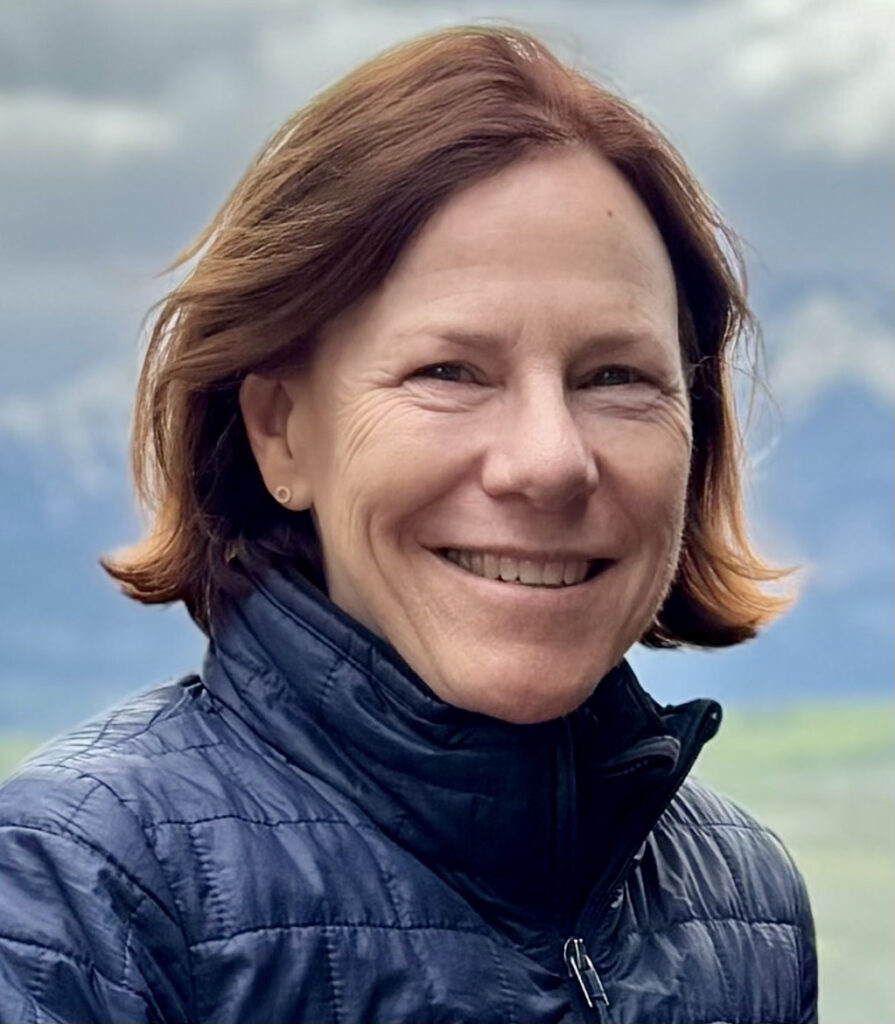
Before joining the Packard Foundation in 2015, Meg spent more than two decades at Stanford University, where she directed the Environmental and Natural Resources Law & Policy Program as well as helped found and lead the Center for Ocean Solutions. She has also served in the public sector, working on the National Commission on the BP Deepwater Horizon Oil Spill and Offshore Drilling, chairing the California Coastal Commission, and helping guide California’s establishment of the nation’s largest scientifically based network of marine protected areas.
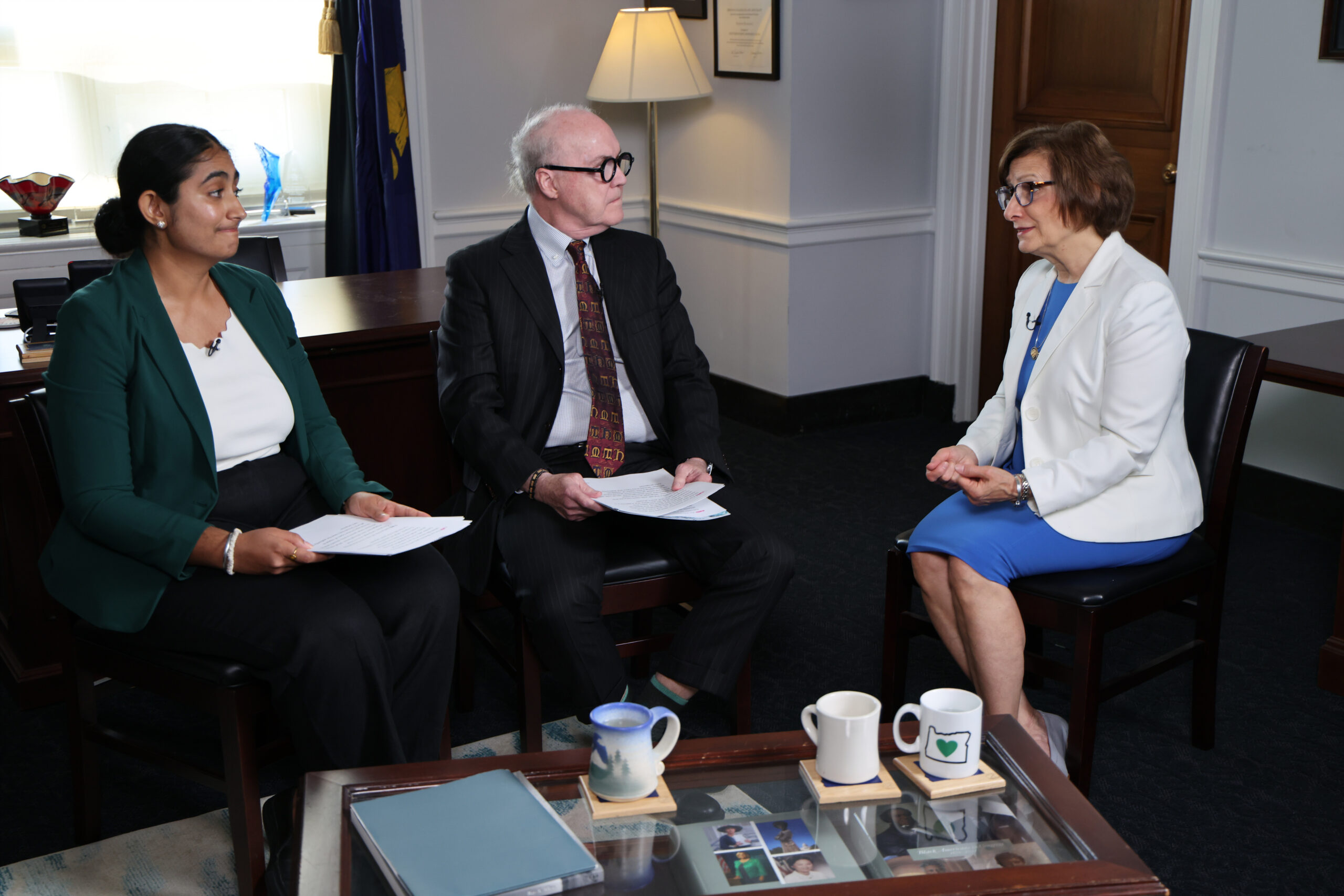
We are grateful for Meg’s deep expertise and guidance in this space, and we were delighted to interview her about her views on ocean-based carbon removal and this moment in climate.
What drew you to Carbon to Sea, and why did this feel like the right board to join at this moment?
The ocean is the heart of Earth’s climate system. In exchange for absorbing 90% of Earth’s atmospheric heat and 30% of the carbon that humans emit, the ocean’s chemistry and ecosystems are changing in ways that undermine the ocean’s basic functions and our reliance on it for food security, livelihoods, cultural traditions, recreation, and spiritual renewal. To ensure a safe climate future, we need to carefully evaluate the feasibility, effectiveness, and safety of climate mitigation options before deploying them at scale. Time is not on our side. Carbon to Sea’s mission addresses this multi-faceted challenge directly.
You have worked across ocean conservation, climate solutions, law, philanthropy, and public service. How has that experience shaped the way you think about the ocean’s role in responding to climate change?
I love environmental and societal challenges that require thinking big and rely on a bunch of different types of expertise to understand and problem solve. The ocean’s role in responding to climate change is precisely this kind of challenge. While at the Packard Foundation — which has been a leader in funding ocean conservation and climate change solutions — I commissioned an independent assessment of the potential for ocean-based climate solutions to combat climate change. That work helped inspire global analyses of “shovel ready” ocean-based solutions, which found that the ocean and ocean-reliant industries can contribute up to 35% of the greenhouse gas emission reductions needed to keep global temperatures within a safe range. We now know that our climate and earth’s ecosystems are changing much faster than anticipated, so ethically exploring new frontiers of science, technology, engineering, and ambition is required.
Carbon to Sea is focused on advancing rigorous, responsible research into ocean alkalinity enhancement. What do you see as the most important questions the field needs to answer right now — and how has that changed over the last few years?
Over the past few years, the field has significantly improved our understanding of OAE’s efficacy as a potential climate solution, as well as its environmental impact. We’re also beginning to understand how OAE can counteract negative effects from climate change like ocean acidification. Building on this work, I think the next question we need to answer is: How can OAE protect ocean and coastal ecological integrity and functioning in the short and long term?
And as we continue to move from lab and mesocosm studies to real-world field research, it’s important to increase our level of community engagement and ask: What must be true for local communities to trust and support OAE (note, this is likely to differ across communities)?
You have been a leader in integrating social equity into conservation and climate work. What should it look like to carry those principles into the development of ocean-based carbon dioxide removal research?
There is a very handy document written for funders that attempts to answer this question! I contributed to its contents and would love to share key excerpts here:
- Embed governance readiness into investment decisions: Ensure funding assessments cover not only technical feasibility, but also whether a project demonstrates transparent, inclusive, and accountable governance.
- Support rights-based and tenure-secure interventions: Invest in projects that deliberately and meaningfully strengthen Indigenous Peoples and local community tenure over marine resources and ensure they have long-term empowerment in decision-making.
- Fund co-designed, locally led initiatives: Support initiatives that have early and ongoing engagement with local contexts. Ensure initiatives are co-developed with Indigenous Peoples and local communities, not simply consulted post-design.
- Invest in social and ethical capacity: Build project teams with interdisciplinary capacity to navigate trade-offs and build inclusive governance. Engage and fund knowledge leadership from Indigenous Peoples and local communities, social scientists, and ethics advisors.
- Advance climate, ecological, and social goals: Ensure projects have a clear, locally grounded theory of change and transparent evidence base.
During your time at Stanford and in California public service, you helped advance major ocean policy and conservation efforts. Are there lessons from those experiences about how new ocean governance frameworks are built, and what makes them durable?
Returning to some articles I’ve co-authored on this topic, here are a few tips:
- Clear principles, objectives, and directives: Any new framework should set out overarching principles, clear tasks, deadlines, and standards by which decisions will be measured and made, as well as for the processes for making decisions, and periodic review for determining progress. Some examples of overarching principles include: use of the best available science and knowledge, and where significant scientific uncertainty exists, use of the precautionary principle* to guide decision making; and commitment to equitable processes and outcomes.
- Accountability: The entities charged with implementing new frameworks need to be accountable both to the government/s (e.g., state, province, nation, Tribes, First Nations) and to community members for effective implementation. This can be accomplished through different tools, including setting clear milestone deadlines, linking funding with achievement or performance, issuing performance reports for public consumption, and/or allowing citizen suits to force governmental compliance with frameworks.
- Transparency: Any new framework should provide maximum transparency so that the bases for analysis and decision-making are clear and the process for making decisions is as obvious as the decisions under consideration.
- Dependable funding: The implementing entity/ies need sufficient and dependable funding to do their work in an equitable, inclusive, evidence-based, and transparent way.
- Adaptive to change: A central tenet of conservation and climate work is that change is inevitable in political, economic, social, and natural systems, so the systems we develop need to include effective feedback mechanisms and be flexible enough to adjust in timely ways while remaining true to the core principles and objectives of the framework. This means effective monitoring systems and incorporation of new information, science, and knowledge as it becomes available. The possibility of regime shifts or “tipping points” in natural systems is important to note here, and the Ocean Tipping Points project is an excellent resource for learning from those who have experienced and/or researched abrupt changes in ocean and coastal systems.
- Independent decisionmaking: To the greatest extent possible, a new legal or policy framework should attempt to foster independent decisionmaking and reduce the potential for agency capture or political gridlock.
*The Precautionary Principle is well-stated in Principle 15 of the 1992 Rio Declaration, “Where there are threats of serious or irreversible damage, lack of full scientific certainty shall not be used as a reason for postponing cost-effective measures to prevent environmental degradation.”
On a more personal note, you have spent much of your career working on behalf of ocean and coastal ecosystems. What keeps you connected to the ocean outside of work?
Well, for starters, I use “OCEAN” as my first Wordle entry every day. And, whether I’m home, up in the Sierra Nevada, or headed to a hike (or meeting) near the ocean, I can conjure up the feeling of being in, on, or along the ocean, which fills me with awe and joy.