
By Carbon to Sea Initiative
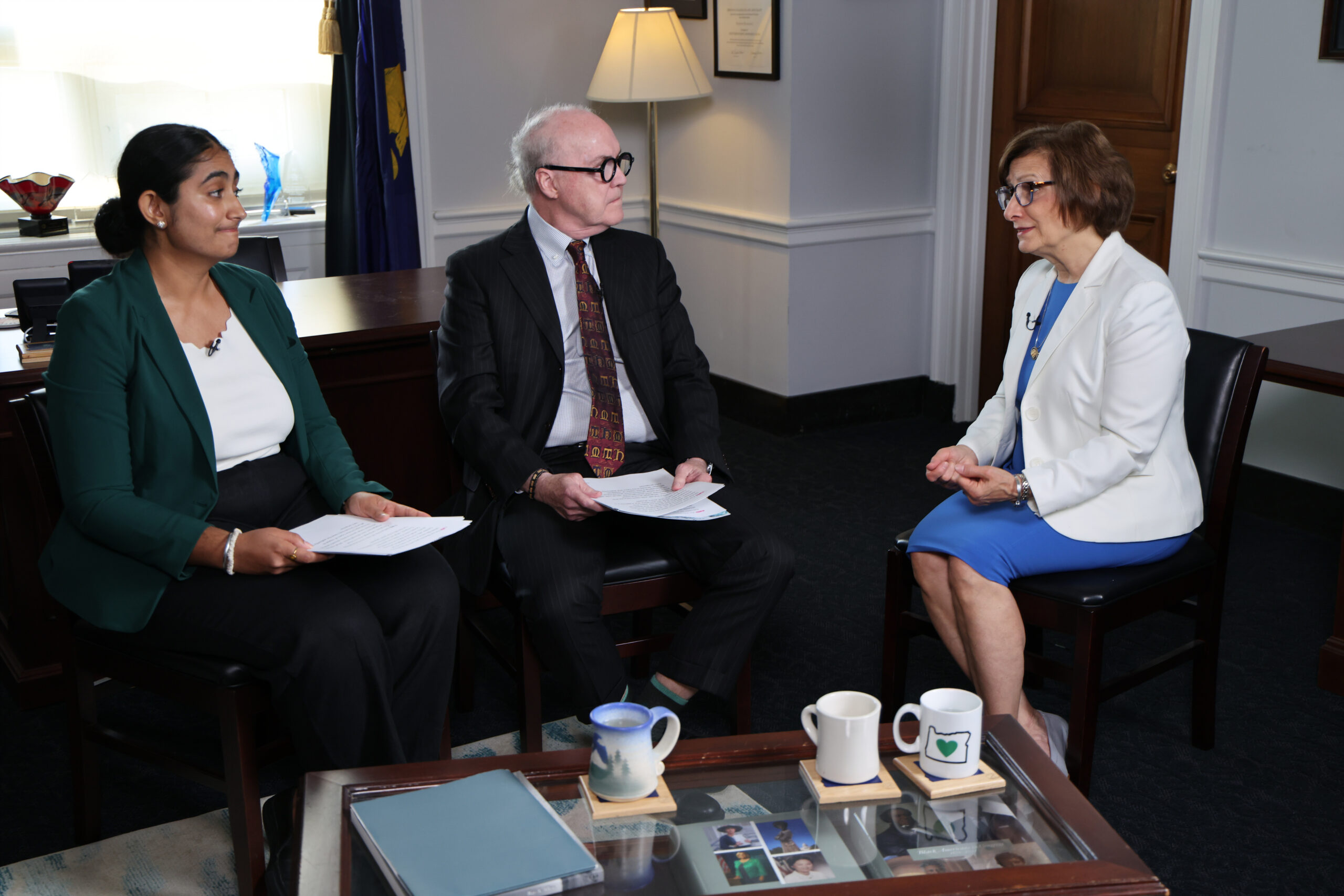
In this special video episode of Plan Sea, host Wil Burns and guest host Priyanka Hooghan, Senior Manager of Policy at Carbon to Sea, sit down with Congresswoman Suzanne Bonamici (D-OR) on Capitol Hill to discuss growing federal support for marine carbon dioxide removal (mCDR) research. As co-chair of the Bipartisan Oceans Caucus, Rep. Bonamici discusses her sponsorship of the ReSCUE Oceans Act, bipartisan legislation that would establish a federal framework for responsible mCDR research, including ocean alkalinity enhancement (OAE). Congresswoman Bonamici also shares how her long-standing work on ocean acidification has informed her approach to ocean policy, why ocean health draws support well beyond coastal districts, and how the field can advance responsibly.
Congresswoman Bonamici represents much of Oregon’s North Coast, and has spent her career addressing the environmental and economic impacts of ocean acidification. When her constituents struggled to raise oysters, she worked with researchers at Oregon State University and local shellfish growers to better understand how ocean acidification was affecting the region’s shellfish and coastal economies. She shares with Wil and Priyanka how that work contributed to her broader efforts to strengthen federal ocean-climate research, including sponsoring the ReSCUE Oceans Act.
The ReSCUE Oceans Act proposes bringing together federal science agencies — including NOAA, NASA, the National Institute of Standards and Technology, and the National Science Foundation — to support mCDR research and develop responsible guidelines for the field. In discussing the legislation, Rep. Bonamici addresses rising threats to federal science agencies and ocean observation programs, underscoring the importance of maintaining scientific expertise at government agencies like NOAA. She also stresses the importance of involving scientists, fishing communities, Indigenous tribes, and other rightsholders in both policymaking and implementation around potential ocean-climate solutions.
“We want to have all the voices around the table,” said Congresswoman Bonamici. “Whenever you’re making policy about the ocean, you need to make sure that people who fish for a living, people who are Indigenous, our tribes, are involved. So we want to have a broad conversation and really work with the scientific experts on getting that framework so we have responsible guidelines for marine carbon dioxide removal. And we’re doing it in a responsible way.”
Congresswoman Bonamici also discusses the bipartisan support for the bill, with Congressman Buddy Carter (R-GA) co-leading the House effort and Senators Brian Schatz (D-HI) and Lisa Murkowski (R-AK) advancing companion legislation in the Senate. She explains how healthy oceans support seafood, tourism, jobs, and the broader health of the planet, giving coastal and inland communities alike a stake in ocean science. Drawing on her experience leading the Bipartisan Oceans Caucus, she explains how connecting ocean policy to people’s livelihoods and everyday concerns has helped build coalitions around issues ranging from ocean acidification to marine debris.
“[mCDR] is an area with a tremendous amount of potential. And when I learned that the ocean can absorb so much carbon and really store it, I thought this is a solution we need to learn more about and we need to do something about this,” said Congresswoman Bonamici.
Looking ahead,Congresswoman Bonamici calls for continued investment in mCDR research, workforce development, public education, and community engagement. Advancing mCDR responsibly, she explains, will require strong science, meaningful stakeholder engagement, and clear explanations of both its potential and outstanding scientific questions.
To learn more about the ReSCUE Oceans Act and the future of federal support for mCDR, listen to the episode above, subscribe with your favorite podcast service, or find the entire series here.
Plan Sea is a semi-weekly podcast exploring ocean-based climate solutions, brought to you by the Carbon to Sea Initiative and the American University Institute for Responsible Carbon Removal.