OCTOBER 19, 2026

By Carbon to Sea Initiative
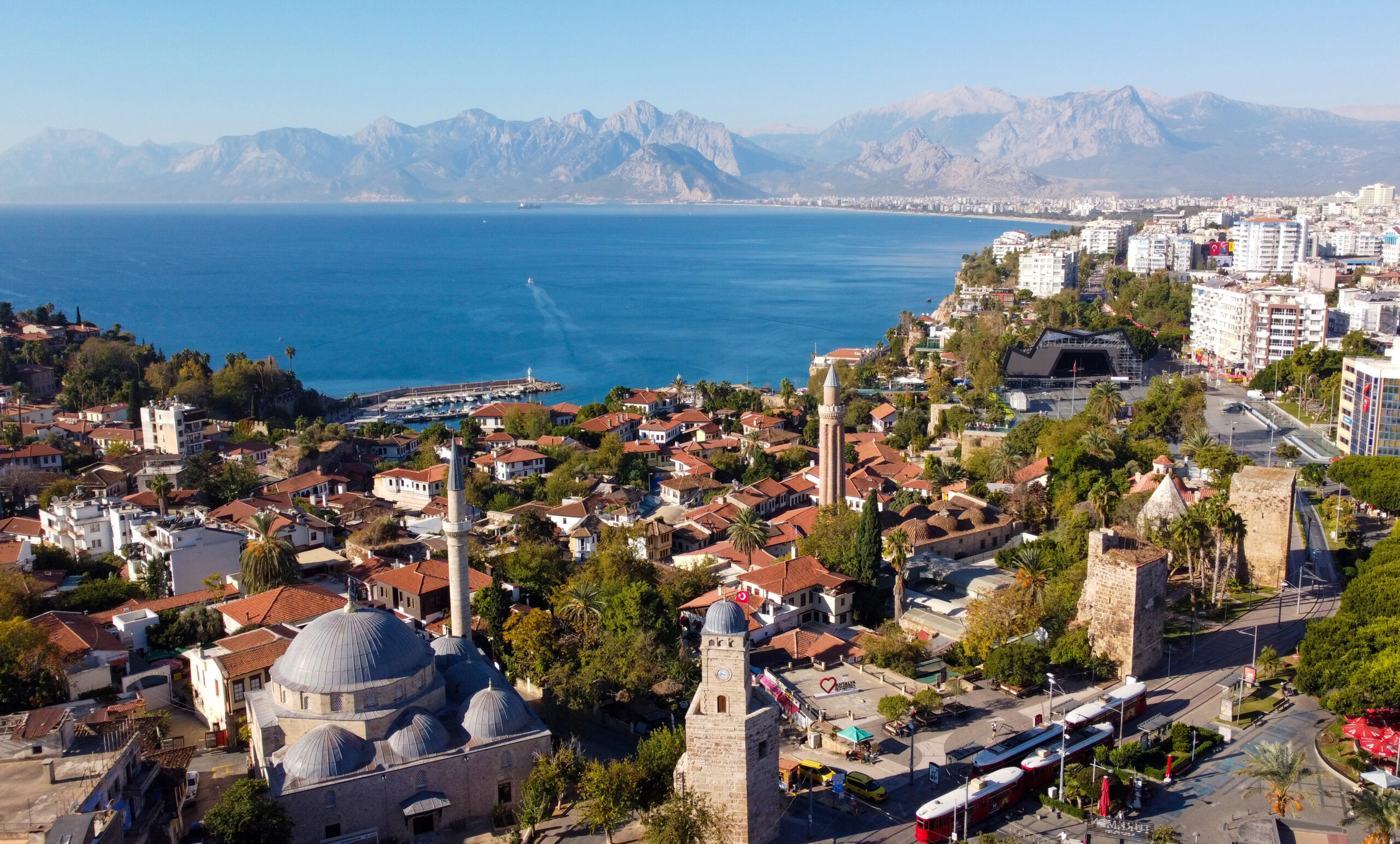
COP31, the 31st Conference of the Parties to the UN Framework Convention on Climate Change (UNFCCC COP), brings governments together to negotiate implementation of global climate policies, including the Paris Agreement. Around these official talks, world leaders, scientists, NGOs, and civil society gather to share solutions and chart the path forward. This year’s conference takes place in Antalya, Türkiye, from November 9 through 20, 2026.
To support our partners, Carbon to Sea has compiled this list of side events related to ocean-based carbon removal (oCDR). To add to this list, please contact Danny Gawlowski, danny@carbontosea.org.
Carbon to Sea Initiative’s Antonius Gagern, Paolo Roberto Domondon, Miriam Zitner, and Aarthi Ananthanarayanan will be attending COP31. Meeting requests can be sent to Priyanka Hooghan, priyanka@carbontosea.org.
Relevant Events
-
- From Coastal Communities to Global Cooperation: Shaping Responsible Marine Carbon Dioxide Removal
- 9:00 – 9:50 at the Ocean Pavilion (B-110)
- Responsible and equitable research on marine carbon dioxide removal (mCDR) requires assessing carbon-removal potential alongside ecological and socio-economic risks. What does responsible research look like, who should shape it, and how can its findings inform climate policy? This open roundtable discussion invites policy leaders, scientists, commercial fishers, ocean-governance experts, and community members to connect coastal experience with national policy and international cooperation.
- Organized by Dalhousie University, Fishery Friendly Climate Action Campaign, and WHOI.
- Learn more
- 9:00 – 9:50 at the Ocean Pavilion (B-110)
- From Coastal Communities to Global Cooperation: Shaping Responsible Marine Carbon Dioxide Removal
-
- Accounting for industrial CDR: what’s needed for companies to invest in integration
- 9:15 – 10:45 at the Think Negative/Negative Emissions Pavilion
- Organized by Rethinking Removals.
- Learn more
- Accounting for industrial CDR: what’s needed for companies to invest in integration
-
- Building the Foundations for Marine CDR In Africa
- 15:45 – 16:45 at the Think Negative/Negative Emissions Pavilion
- Organized by the Ocean Climate Innovation Hub and sponsored by Kuehne Foundation
- Learn more
- Building the Foundations for Marine CDR In Africa
-
- How governments are building demand for carbon removal
- 14:30 – 15:30 at the Think Negative/Negative Emissions Pavilion
- More countries are running or building carbon markets, and bringing carbon removals into them is one of the strongest ways to create long-term demand. Governments are taking different routes: some buy removals directly using carbon market revenues, while others let companies use removals to meet their obligations. Each also has to decide which removals qualify and how they’re certified. This panel brings government officials and industry together to compare their approaches and what other countries can adopt as they design their own markets.
- Organized by Isometric.
- Learn more
- How governments are building demand for carbon removal
-
- South-East Asia’s role as a Global CDR supply hub
- 9:30 – 10:30 at the Think Negative/Negative Emissions Pavilion
- Durable carbon removal will need supply from regions with large volumes of biomass residues, available land and competitive project costs, and South-East Asia has all three. This panel looks at CDR supply from the host-country side: what governments want from it, which tools they are using, and what they need from buyers and the market to get projects built.
- Organized by Puro.earth.
- Learn more
- South-East Asia’s role as a Global CDR supply hub
-
- Synergies between coastal conservation and ocean-based climate solutions
- 10:30 – 11:30 at the German Climate Pavilion
- The potential of blue carbon has already been reflected in some countries’ Nationally Determined Contributions and Adaptation Plans, also inspired by the Blue NDC Challenge. This event will highlight best practices and potentials, policy requirements as well as means of implementation in a global context.
- Organized by GEOMAR, German Federal Environmental Foundation.
- Learn more
- Synergies between coastal conservation and ocean-based climate solutions
-
- Carbon Removal in New Zealand: Past and Present Frontiers
- 11:00 – 12:00 at the Think Negative/Negative Emissions Pavilion
- Organized by University of Canterbury.
- Learn more
- Carbon Removal in New Zealand: Past and Present Frontiers
-
- Harnessing Synergies and Strengthening the Role of the Ocean in NDCs
- 12:45 – 13:35 at the Ocean Pavilion (B-110)
- The Blue NDC Challenge encouraged countries to recognise benefits of coastal ecosystems in their emission reduction goals. At this event, experts will discuss ways to better harness carbon uptake potentials of blue carbon ecosystems and monitor progress towards NDCs, as well as key enablers, research needs and policy requirements. The panel will also address synergies with other international agreements.
- Organized by GEOMAR.
- Learn more
- Harnessing Synergies and Strengthening the Role of the Ocean in NDCs
-
- A Close Eye on our Ally: Unlocking the Social, Economic and Financial Values of Ocean Observation
- 10:15 – 11:05 at the Ocean Pavilion (B-110)
- Systematic observation helps nations track their efforts to limit global warming and related risks for climate, biodiversity and humankind. In a rapidly changing climate, ocean observations need to be considered as critical infrastructure to support economic and financial activities. In this context, the OceanEye Initiative is taking shape to support the Global Ocean Observing System (GOOS). How can we unlock the full value of ocean observations and mobilise the capital needed to scale them?
- Organized by GEOMAR.
- Learn more
- 10:15 – 11:05 at the Ocean Pavilion (B-110)
- A Close Eye on our Ally: Unlocking the Social, Economic and Financial Values of Ocean Observation
-
- From Negotiation to Action: Building Credible Carbon Markets to unlock the potential of Africa’s Carbon Sinks
- 15:45 – 16:45 at the Think Negative/Negative Emissions Pavilion
- Organized by GIZ.
- Learn more
- 15:45 – 16:45 at the Think Negative/Negative Emissions Pavilion
- From Negotiation to Action: Building Credible Carbon Markets to unlock the potential of Africa’s Carbon Sinks
-
- Blue Carbon and Marine Carbon Dioxide Removal (mCDR): Navigating Pathways for Ocean Climate Action
- 16:30 – 17:20 at the Ocean Pavilion (B-110)
- The climate crisis demands every credible solution. Blue carbon ecosystems deliver immediate, multi-benefit carbon sequestration and storage, while marine carbon dioxide removal (mCDR) is expected to play a growing role in achieving large-scale carbon removal. Join leaders from science, policy, and finance to explore how blue carbon and high-integrity mCDR can work together, and what is needed to responsibly scale these approaches into financed, actionable climate solutions.
- Organized by Conservation International and Grantham Environmental Trust.
- Learn more
- 16:30 – 17:20 at the Ocean Pavilion (B-110)
- Blue Carbon and Marine Carbon Dioxide Removal (mCDR): Navigating Pathways for Ocean Climate Action
-
- Measuring what we remove: CDR and CCUS in National Inventories – IPCC Methodologies
- 9:30 – 10:30 at the Think Negative/Negative Emissions Pavilion
- Organized by the Intergovernmental Panel on Climate Change.
- Learn more
- Measuring what we remove: CDR and CCUS in National Inventories – IPCC Methodologies
-
- Ocean Negative Carbon Emissions: A Joint Effort from the Global ONCE Community
- 14:00 – 14:50 at the Ocean Pavilion (B-110)
- The Global ONCE initiative scales up ocean negative carbon emissions through land-sea engineering, wastewater alkalinity enhancement, and aquaculture. Guided by the Triple REAL framework, it advances equitable, verifiable governance under BBNJ, extending beyond MRV. Our goals are to demonstrate ONCE innovations, align with COP31, and integrate these efforts into NDCs. The panel aims to unite policymakers, scientists, NGOs, and industry to bridge science, equity, and governance—closing the emissions gap and boosting global cooperation.
- Organized by Global ONCE.
- Learn more
- 14:00 – 14:50 at the Ocean Pavilion (B-110)
- Ocean Negative Carbon Emissions: A Joint Effort from the Global ONCE Community
-
- Understanding Ocean-Based Carbon Dioxide Removal (mCDR): A Briefing for Tanzania’s Decision-Makers
- 10:00 – 12:00 at the Tanzania Pavilion
- Organized by the Institute of Environment, Climate, and Development Sustainability; Carbon to Sea; and ELCA Environmental Firm
- Understanding Ocean-Based Carbon Dioxide Removal (mCDR): A Briefing for Tanzania’s Decision-Makers
-
- Building social license and research fundamentals to enable national action: Unlocking the potential of ocean-based carbon removal
- 12:30 – 13:30 at the Think Negative/Negative Emissions Pavilion
- This panel will provide key perspectives for policymakers and civil society looking to support advancements at the science-policy-societal interface, such as: 1) how mCDR might eventually be reflected in future climate and market policies; 2) how can emerging research be designed to reflect climate, environmental and social priorities.
- Organized by Dalhousie University and Carbon to Sea.
- Learn more
- Building social license and research fundamentals to enable national action: Unlocking the potential of ocean-based carbon removal
-
- Driving Ambition, Fostering Accountability: How the Our Ocean Conference Mobilizes Ocean Commitments
- 12:45 – 13:35 at the Ocean Pavilion (B-110)
- The window to avoid the most extreme ocean-climate impacts is closing. At COP31, the focus is on action. Voluntary commitments made through the Our Ocean Conference are a proven mechanism for implementing rapid, effective ocean-climate solutions. This event will highlight successful examples of voluntary commitments that catalyze partnerships, finance, and policy solutions, and explore how OOC12, hosted by Canada in May 2027, will build upon outcomes of COP31 to deliver meaningful action.
- Organized by the World Resources Institute/Our Ocean Conference Secretariat and the Government of Canada.
- Learn more
- Driving Ambition, Fostering Accountability: How the Our Ocean Conference Mobilizes Ocean Commitments
-
- Industrial Decarbonization Through Climate Technologies: Pathways for Deployment at Scale Across Economies
- 17:30 – 18:30 at the Italy Pavilion
- Organized by the United Nations Industrial Development Organization (UNIDO),
Limenet, and Baker Hughes. - Learn more
- Industrial Decarbonization Through Climate Technologies: Pathways for Deployment at Scale Across Economies
-
- Navigating Ocean-based Technologies: The 2026 Climate Technology Progress Report (CTPR)
- 10:15 – 11:05 at the Ocean Pavilion (B-110)
- This session celebrates the launch of the 2026 Climate Technology Progress Report, which explores the technologies and approaches that can help protect and enhance the ocean’s role in the climate system. Lead authors will discuss the report’s findings, opportunities, and challenges for three connected ocean technology areas – ocean observations, blue carbon ecosystem management, and marine carbon dioxide removal – including a regional perspective on their importance for Small Island Developing States.
- Organized by the National Oceanography Centre and UNEP Copenhagen Climate Centre.
- Learn more
- Navigating Ocean-based Technologies: The 2026 Climate Technology Progress Report (CTPR)
-
- Global South Governments on Carbon Removal as an Investment and Development Pathway
- 11:00 – 12:00 at the Think Negative/Negative Emissions Pavilion
- Organized by Exomad.
- Learn more
- Global South Governments on Carbon Removal as an Investment and Development Pathway
-
- Building the Innovation Ecosystem: What It Takes to Advance Responsible Marine Carbon Removal Research
- 13:00 – 14:00 at the Canada Pavilion
- This session brings together speakers who will each present one concrete innovation from their work: Indigenous engagement that lays the groundwork for communities to shape how research is designed, monitored and evaluated; frameworks for responsible engagement between mCDR research and fishers; bilateral cooperation between Canada and Australia; international research collaboration; and a blended funding partnership that lets university researchers and start-ups work side by side at one field research site in Bedford Basin. Together, these innovations show how the government, civil society, companies and philanthropy can work together to advance climate solutions and fund work that no single sector can do alone.
- Organized by Carbon to Sea, Pokiok Associates, and Dalhousie University.
- Learn more
- Building the Innovation Ecosystem: What It Takes to Advance Responsible Marine Carbon Removal Research
-
- Ocean-Climate Interventions and Community Experiences: Lessons from Canadian Leadership on Ocean Science and Governance
- 15:00 – 16:00 at the Canada Pavilion
- Organized by Ocean Visions.
- Learn more
- Ocean-Climate Interventions and Community Experiences: Lessons from Canadian Leadership on Ocean Science and Governance
-
- Ocean-Based Carbon Removal Deep Dive and Reception: New Research, Emerging Governance and the Path to COP32
- 16:00 – 18:30 at the Think Negative/Negative Emissions Pavilion
- Research on ocean-based carbon dioxide removal is advancing, and some pathways (e.g., ocean alkalinity enhancement) show early promise. A growing body of evidence from laboratory studies, field research, modeling, and measurement and monitoring efforts aims to close critical knowledge gaps on safety and effectiveness. At the same time, governments are strengthening the governance needed to evaluate that evidence and guide responsible research. This event will take stock of both: what recent mCDR research is telling us about its potential, uncertainties, and outstanding questions, and how emerging national and international governance can provide greater regulatory clarity while protecting the ocean. These two deep dives will be capped by announcements of various global and regional mCDR initiatives that aim to support strong science and effective governance.
- Organized by Carbon to Sea, Environmental Defense Fund, CSIRO, and CDR 2030.
- Learn more
- Ocean-Based Carbon Removal Deep Dive and Reception: New Research, Emerging Governance and the Path to COP32
-
- Carbon Removal Readiness Assessments – a tool to jumpstart planning at country level
- 11:00 – 12:00 at the Think Negative/Negative Emissions Pavilion
- Organized by CarbonGap.
- Learn more
- Carbon Removal Readiness Assessments – a tool to jumpstart planning at country level
- From Carbon Accounting to Carbon Crediting in the Ocean
- 14:00 – 14:50 at the Ocean Pavilion (B-110)
- The deep ocean is where carbon absorbed at the air/sea interface is stored and acquires the long residence time that makes it climatically meaningful. Developing credible MRV standards for marine carbon dioxide removal activities leveraging this natural service is essential to verify the additionality they may promote. This side event will address this burgeoning field of research in a discussion with an international panel of specialists.
- Organized by the Portuguese Institute for Sea and Atmosphere (IPMA) and the Secretary of State for Fisheries and Sea
- Learn more