
By Carbon to Sea Initiative
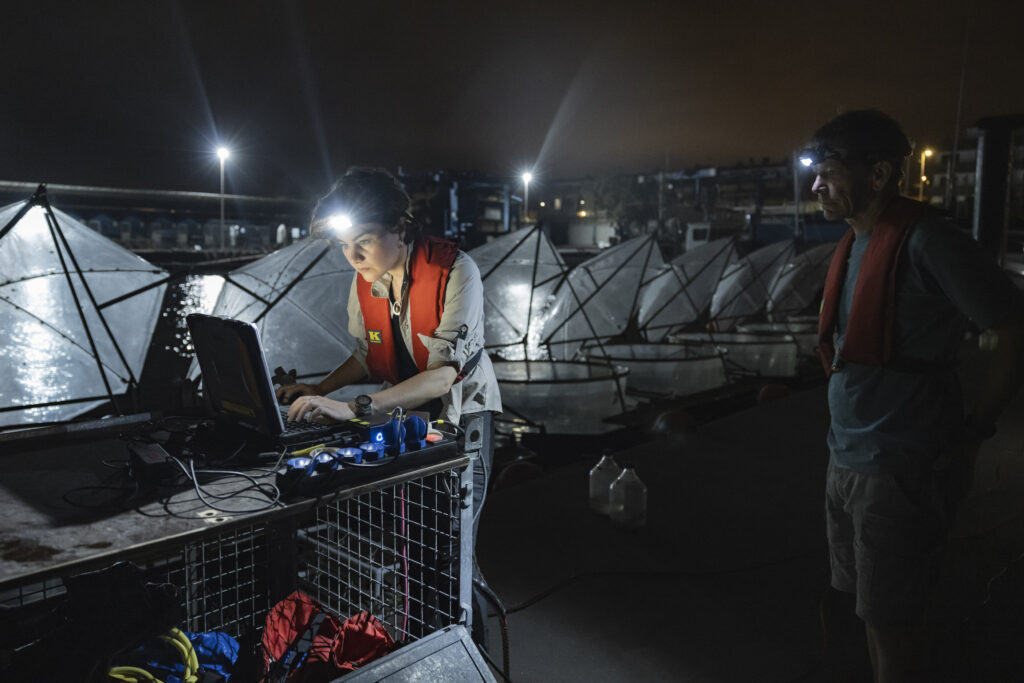
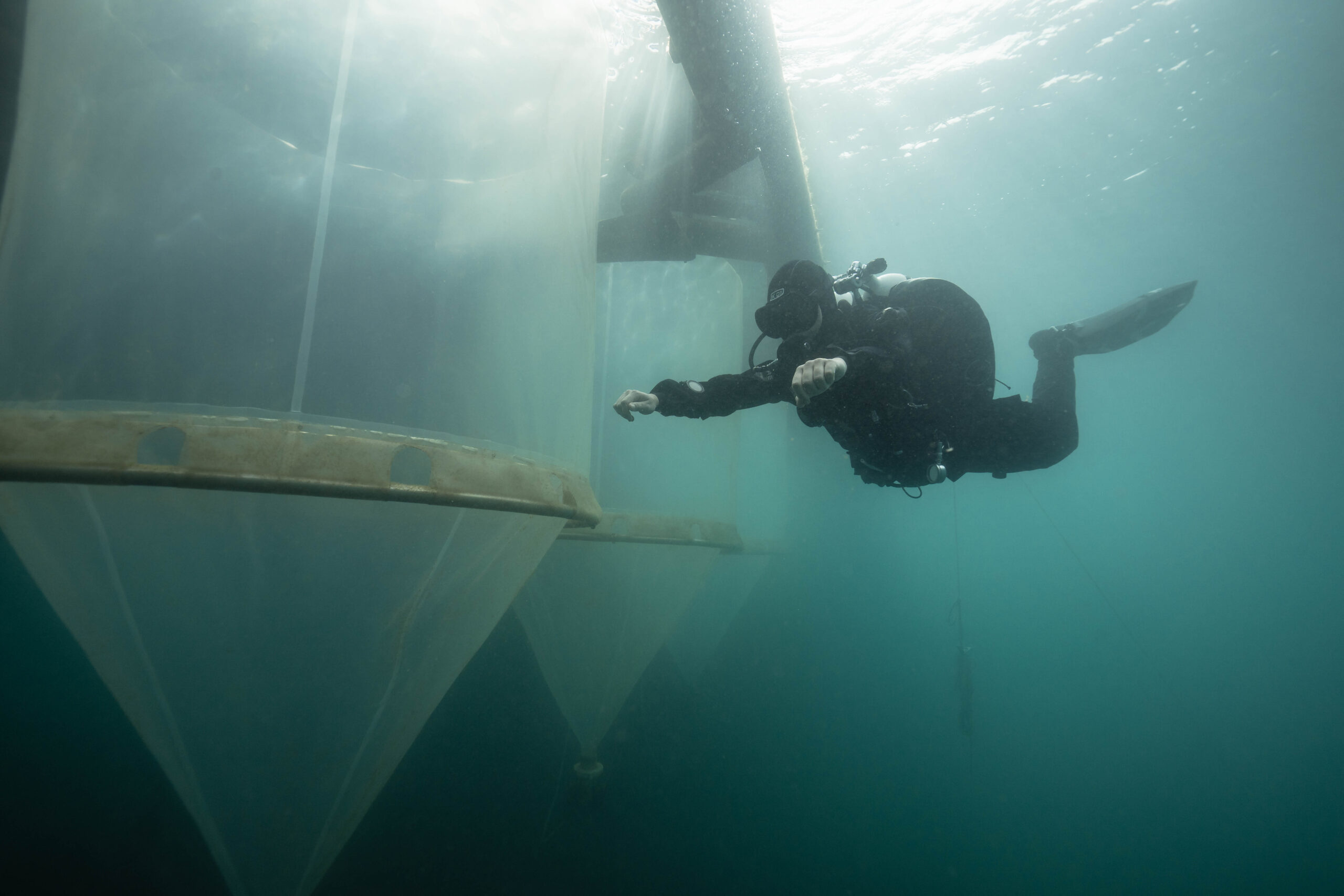
Last month, an international research team led by the GEOMAR Helmholtz Centre for Ocean Research Kiel launched a seven-week experiment in the harbor of Taliarte, on the east coast of Gran Canaria, Spain. This is a first-of-its-kind study, testing whether ground concrete rubble can increase the alkalinity of seawater, and what effect this has on marine life. The experiment is part of Ocean Alk-Align, an international research project aimed at standardizing how ocean alkalinity enhancement (OAE) is measured and assessed.
Concrete rubble is one of the largest waste streams in the world, with an estimated five billion metric tons generated each year and only a fraction reused. Because concrete contains alkaline cement, finely ground rubble could, in principle, serve as an alkalinity source. This question sits at the center of GEOMAR’s research.
At sea, however, the particles could increase turbidity or harm microorganisms, with potential consequences for the wider food web. As part of this study, researchers tracked the seawater carbonate system, CO2 uptake, plankton and microbial responses, and signs of shifts in the food web to assess both effectiveness and potential side effects of this potential climate solution.
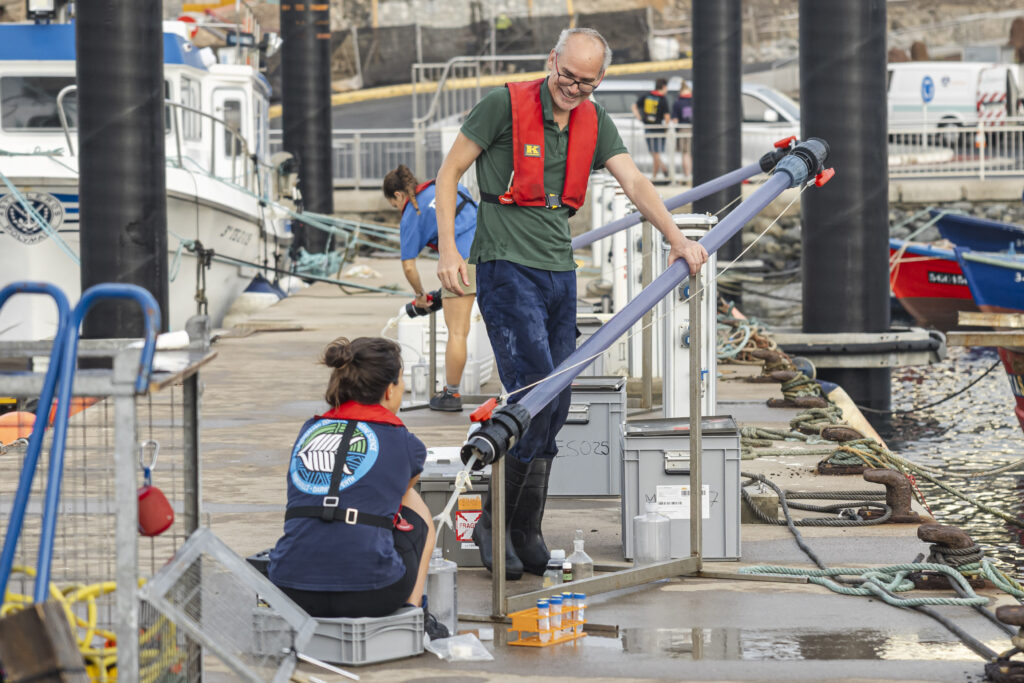
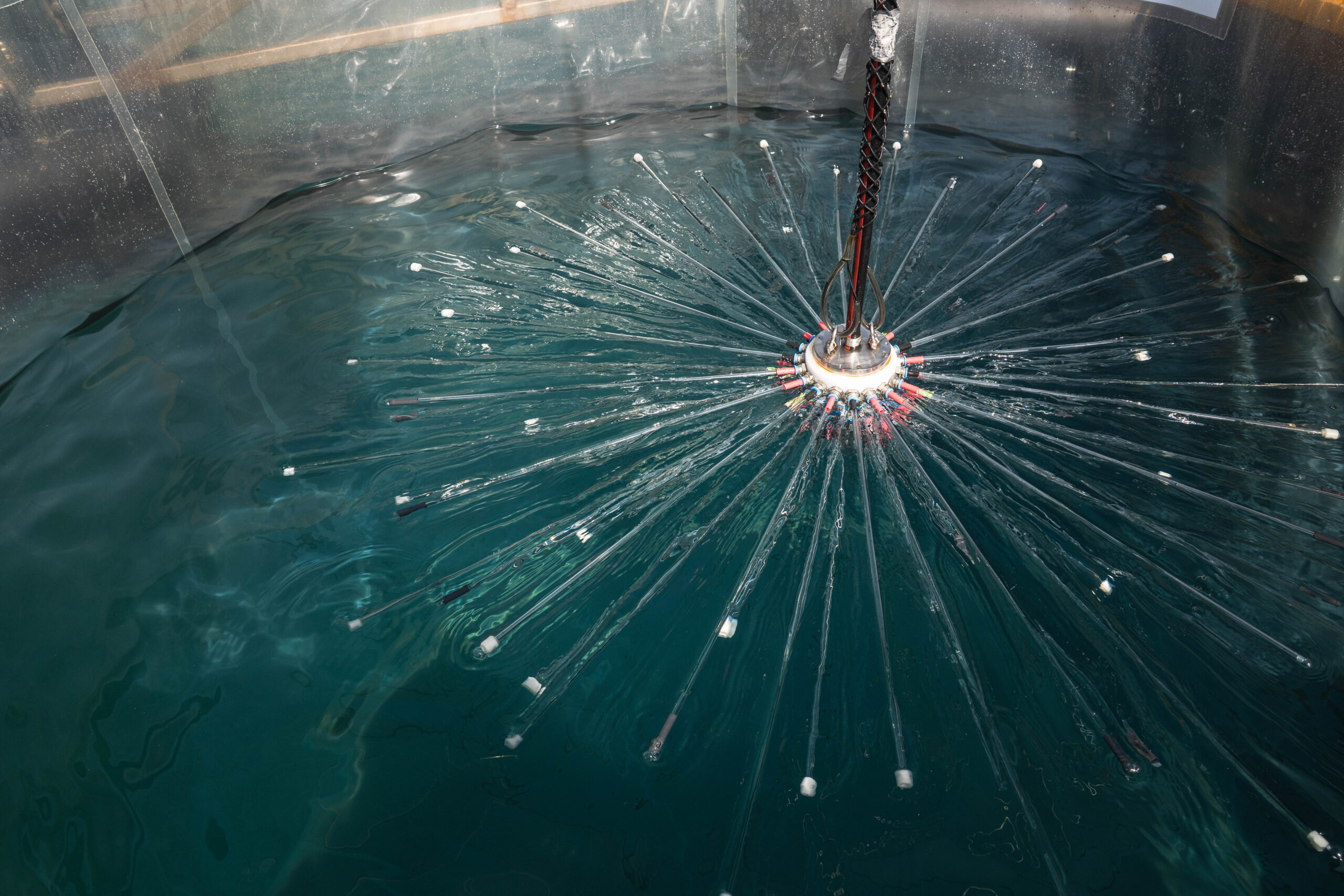
Co-led by Prof. Dr. Ulf Riebesell, marine biologist at GEOMAR, and Dr. Kai Schulz, Associate Professor at the Southern Cross University School of Environment, Science, and Engineering in Australia, the team is operating twelve mesocosms — large floating enclosures closed off from the surrounding seawater — from Plataforma Oceánica de Canarias (PLOCAN), a long-standing GEOMAR research partner located at the harbor. The natural plankton communities inside are exposed to one of three conditions: ground concrete rubble in increasing quantities, liquid sodium hydroxide (NaOH) as a reference for pure alkalinity, or no additions as a control. Sodium hydroxide and ground concrete sit at almost opposite ends of the spectrum: one is produced through an energy-intensive electrochemical process and dissolves instantly, while the other is a waste material that already exists in huge quantities and releases its alkalinity relatively slowly.
“Comparing sodium hydroxide and ground concrete side by side lets us ask not only how effective each one is, but how the plankton community responds to such different ways of adding alkalinity,” said Giulia Faucher, Postdoctoral Research Fellow at GEOMAR. “Having people from so many countries and backgrounds makes these conversations much richer. We’re leaving with a wealth of beautiful data to unpack.”
Over several weeks, the effect on plankton communities was carefully observed and measured. Side experiments on the vertical distribution of alkalinity in a water column were also conducted to assess the efficiency of the approach. The research team compared two alkaline materials of interest — Ca(OH)2 and Mg(OH)2 — to help identify differing loss pathways.
“Defining the safe operating space of the various OAE approaches, for example, liquid vs. particulate or CO2-equilibrated vs non-equilibrated, which all have their individual thresholds, has been one of the key goals of the present and previous mesocosm experiments,” said Dr. Kai Schulz, Associate Professor at Southern Cross University.
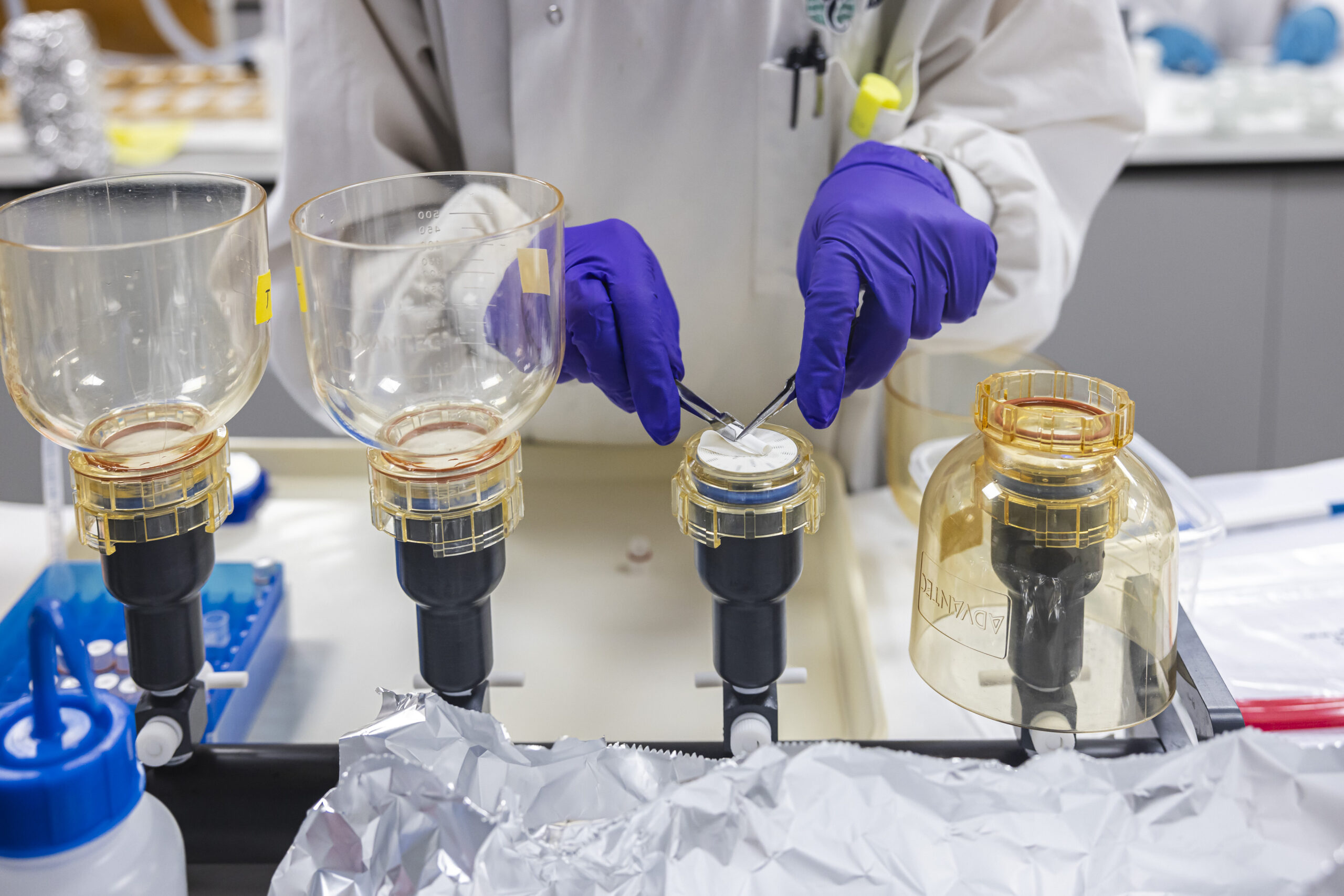
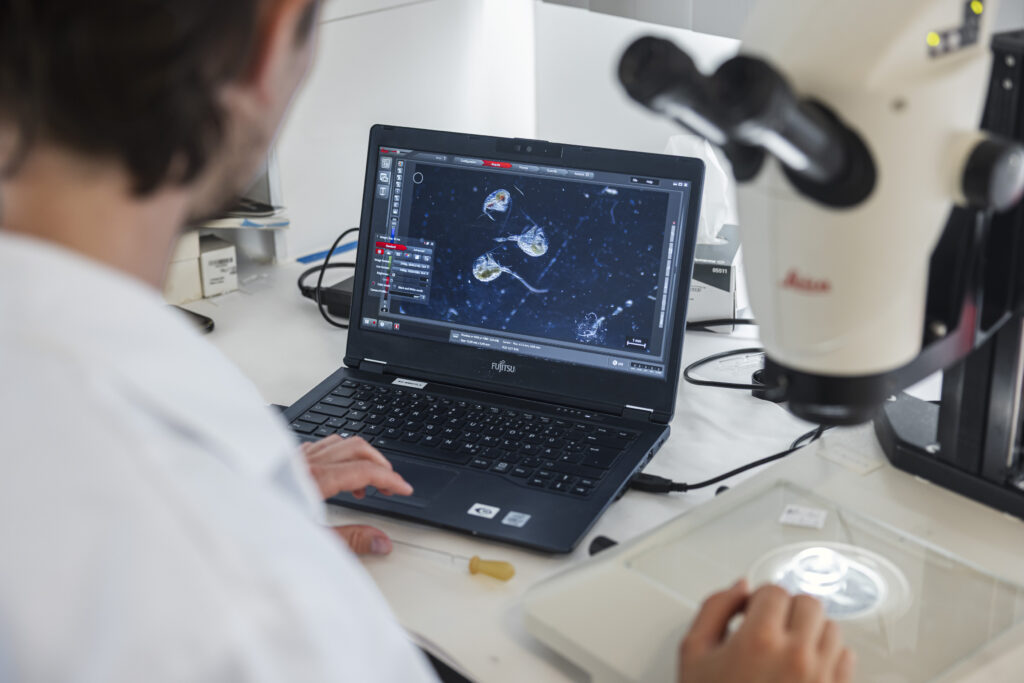
The project also included work from multiple students and served to give them opportunities to help advance the science of OAE.
“It’s a true pleasure to work with and learn from my colleagues, especially as I gain insights from different disciplines every day while contributing an important piece of the puzzle to our shared research goals. For me, the project combines excellent research, an inspiring drive for knowledge, and great people who leave a lasting impression well beyond the science itself,” said Torge Willrodt, master’s student at the University of Kiel.
Initial findings indicate adding concrete rubble to seawater successfully increased alkalinity, while also delivering small amounts of the macronutrient phosphate and larger amounts of silicate. These preliminary results suggest that diatoms could have been profiting within the phytoplankton community.
As more samples are analyzed, results from this research will help answer key questions for the OAE field: which doses shift seawater chemistry as intended, at what point ecological effects appear, and how solid particles compare with dissolved alkalinity? Dr. Schulz summarized the approach as “understanding before scaling up,” stressing that any larger-scale discussion of OAE must rest on transparent data about its benefits and risks.
Learn more about the research here: https://www.geomar.de/en/news/article/construction-waste-for-climate-protection-in-the-ocean