
By Carbon to Sea Initiative
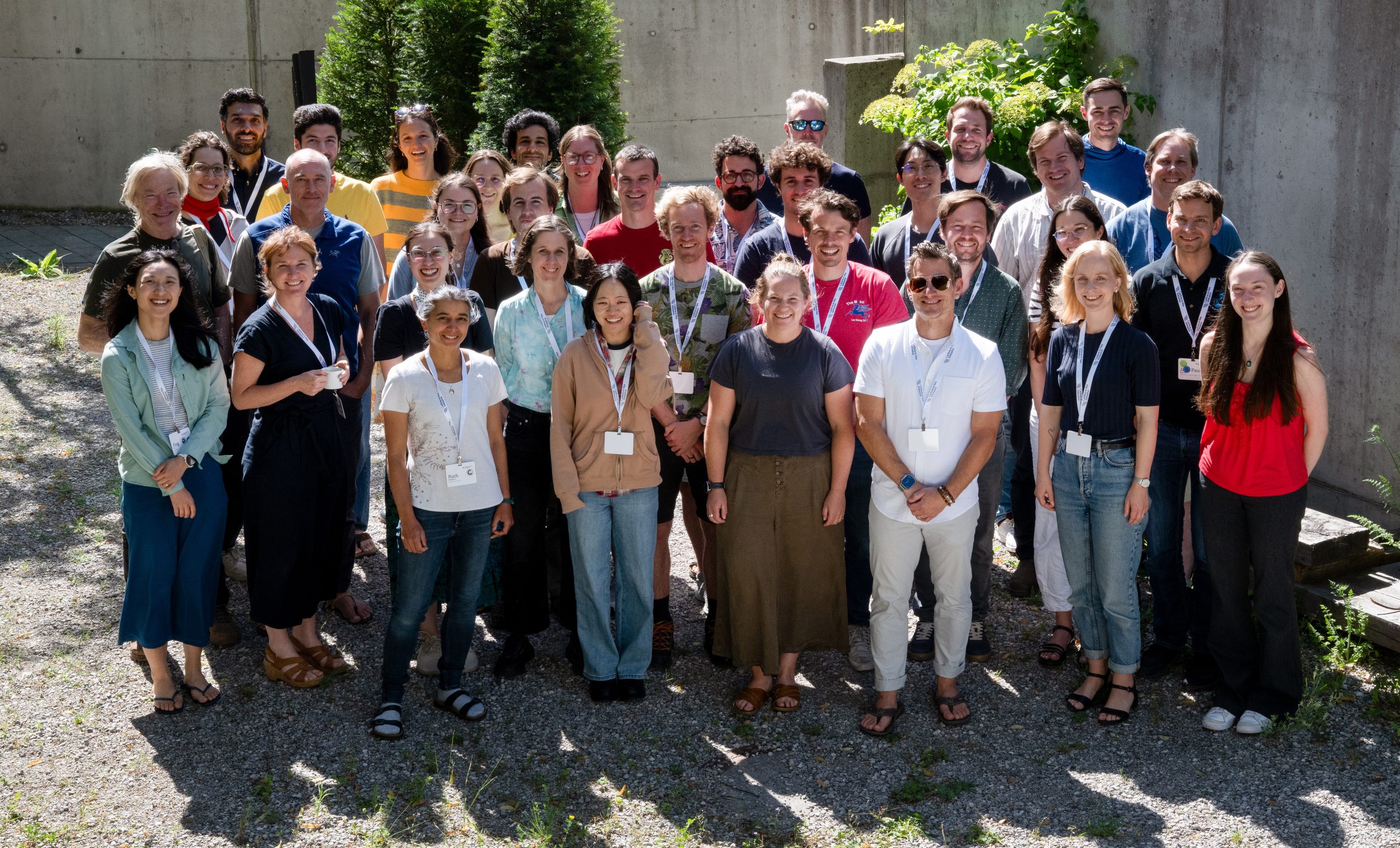
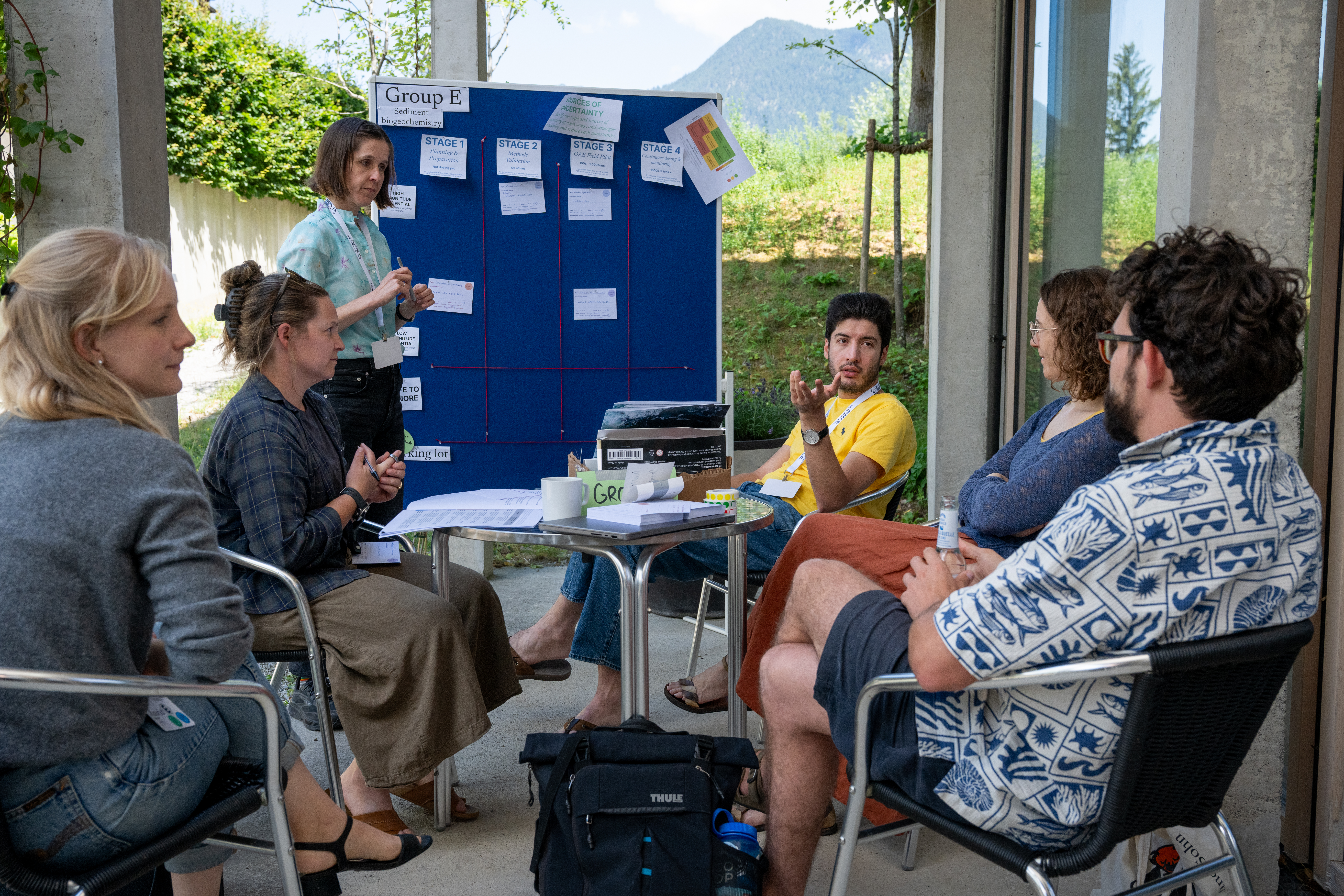
This summer, Carbon to Sea convened 35 leading researchers, practitioners, and private sector experts in Garmisch-Partenkirchen, Germany, for the Ocean Alkalinity Enhancement (OAE) Model Skill Assessment Workshop. Participants came together to establish a foundational understanding of model skill assessment guidelines for OAE monitoring, reporting, and verification (MRV).
Marine biogeochemical models are the primary tool for quantifying carbon dioxide removal (CDR) in OAE MRV frameworks. However, as the field expands, modeling standards must evolve alongside it to account for complex OAE-relevant processes. This workshop aimed to advance the field of OAE modeling by establishing cross-sector consensus on skill assessment protocols and uncertainty quantification of models currently used to simulate OAE.
OAE Model Skill Assessment Workshop Proceedings Document
Presentations from Frontier, Environmental Defense Fund, the Alfred Wegener Institute, Woods Hole Oceanographic Institution (WHOI), Dalhousie University, [C]Worthy, Planetary, Hourglass Climate, and National Oceanic and Atmospheric Administration (NOAA) grounded discussions in the current state of the field and adjacent ones, highlighting observational data gaps, modeling challenges, and operational constraints across ocean regions.
Rather than focusing on long-term or future technological capabilities, participants were asked to consider and evaluate what is achievable right now using current observations, existing tools, and realistic budgetary constraints.
The work was organized around three layers of model skill assessment:
- Fit-for-purpose criteria: The processes and configurations a model must demonstrate to be suitable for OAE MRV,
- Model-observation comparisons: The data and approaches needed to validate model performance against both baseline conditions and OAE intervention signals,
- Uncertainty quantification: The statistical methods, metrics, and error propagation approaches needed to determine, report, and account for CDR uncertainty.
These layers operated as the defining qualifications across five oceanographic process-oriented groups: dissolution and conversion of alkalinity, biogeochemical cycles, physical transport mechanisms, air-sea gas exchange, and sediment biogeochemistry. Participants explored these topics through group work, technical deep dives, and readout sessions. Throughout the discussions, experts drew parallels from adjacent fields, such as watershed management, ecotoxicology, and fisheries management, each taking time to establish accepted skill metrics OAE is now working toward.
Next steps
Following the workshop, eleven grants were awarded to participants to test hypotheses and analyses that emerged during the week. Results will inform the model skill assessment guidelines and a perspectives paper.
A lead team of editors, including Alicia Karspeck, Tyler Rohr, Veronica Tamsitt, and Anna Madlener, is synthesizing the group’s recommendations into a set of model skills guidelines, which will be released for public comment later this year. A separate authorship team coordinated by Lauren Moseley is putting together a paper on the workshop outcomes and R&D priorities. Questions about the process, workshop outcomes, or opportunities to get involved can be directed to Anna Madlener at anna@carbontosea.org.
Thank you to our steering committee members Abby Lunstrum, Adam Subhas (WHOI), Alicia Karspeck ([C]Worthy), Elizabeth Yankovsky (Yale University), Pedro Monteiro (Stellenbosch University), and Veronica Tamsitt (Submarine Scientific), as well as to all presenters and participants. We also thank the team at Quartier for hosting us.